
Introduction
On high-speed SMT lines, pick and place machines precisely mount tens of thousands of minute components per hour. But have you ever considered: how are these components delivered to the placement head in a stable, orderly, and uninterrupted manner? The answer lies within a seemingly unremarkable yet critically important component-the pick and place Feeder.
In automated production lines, Feeders may be small, yet they directly determine placement accuracy, production efficiency, and overall line stability. This article delves into: What exactly is a feeder? What types exist? How do they impact smart manufacturing? And how to select the most suitable feeder system for your production line.
I. Definition and Core Function of the SMT Feeder
1. What is a Feeder?
The SMT Feeder, also termed a 'component Feeder', is a precision mechanical device that reliably and systematically conveys components (such as resistors, capacitors, IC chips, etc.) from their original packaging (e.g., tape reels, trays, tubes) to the pick-up position of the placement head.
2. Feeder Workflow Overview
Taking the most common tape-and-reel feeder as an example: components are encapsulated within a plastic carrier tape, covered by a protective film. The feeder employs mechanical or electric drive to precisely peel away this protective film, exposing the components at a predetermined position. When the pick-up head descends to pick up a component, it must be accurately positioned, correctly oriented, and free from displacement. This entire process must be completed within milliseconds, with repeatability accuracy maintained within ±0.05mm.
3. How Feeders Impact Placement Accuracy and Yield
Feeder supply stability directly determines placement quality. Issues such as feed misalignment, jamming, or skipping components will result in:
- Component pickup failure, causing placement omissions.
- Component angular deviation, leading to polarity errors or soldering defects.
- Frequent pick-and-place head alarms and stoppages, reducing Overall Equipment Effectiveness (OEE).
Therefore, a high-precision feeder is a prerequisite for achieving high SMT yield rates (>99.5%), rather than a mere optional accessory.
II. Common Types of Pick and Place Feeder and Their Applications
Based on component packaging formats and production line requirements, feeders are primarily categorised as follows:
1. Tape Feeders
Suitable for over 80% of standard surface-mount components (e.g., 0201, 0402 resistors/capacitors, small ICs).
- Mechanical Feeders: Driven by purely mechanical structures such as cams and gears. Simple construction, low cost, and high stability make them ideal for stable mass production.
- Electric SMT Feeders: Utilise servo motors for faster response and higher precision, supporting non-stop material changes and hot-swapping. More suitable for high-speed SMT placement machines and flexible production lines.
Electric feeders have become standard equipment in high-end SMT production lines, particularly in consumer electronics, significantly enhancing UPH (Units Per Hour).
2. Tray Feeder
Used for handling large or irregularly shaped ICs that cannot be reel-packaged, such as BGAs, QFPs, QFNs, and connectors.
The key to tray feeders lies in positioning repeatability and anti-static design, making them commonly used in manufacturing high-reliability products like automotive electronics and communication base stations.
3. Stick Feeder and Bulk Feeder
- Stick Feeder: Suitable for strip-packaged through-hole components or specialised parts (e.g., electrolytic capacitors, relays), delivering components to the pick-up point via gravity or vibration.
- Bulk Feeder (Vibratory Feeder): Processes unpackaged bulk components. Low-cost but with reduced precision, primarily employed in low-demand or repair scenarios.
Note: Bulk Feeders are not recommended for smart manufacturing or high-reliability production lines due to their susceptibility to component mix-ups and difficulty in traceability.
III. How Do Feeders Impact SMT Production Line Efficiency and Intelligence Levels?
1. Reducing Downtime and Enhancing OEE
Traditional Feeder changeovers require machine shutdown and manual alignment, taking 5–10 minutes. Modern quick-change feeders with standardised interfaces complete replacements within 30 seconds; foolproof designs (such as RFID identification) eliminate misfeed risks, significantly reducing unplanned stoppages.
Industry statistics indicate optimising Feeder systems can elevate overall line OEE by 8–12%.
2. Intelligent Feeders
High-end SMT production lines are adopting Smart Feeders, whose integrated sensors and communication modules enable:
- Real-time component counting: Automatically tracks remaining stock levels and triggers replenishment alerts.
- Batch and model identification: Verifies materials via barcodes/RFID to prevent cross-contamination.
- MES system integration: Uploading feeding data to the Manufacturing Execution System for full process traceability.
For instance, in automotive electronics production, every component on each PCB must be traceable. Smart feeders serve as the primary data entry point for achieving this objective.
3. Maintenance and Servicing
Though precision-engineered, Feeders accumulate dust and wear during prolonged high-speed operation. Failure to periodically clean guide rails and calibrate feeding positions may result in:
- Feeding misalignment → Placement misalignment → Soldering defects.
- Frequent jams → Equipment alarms → Reduced output.
Establish a scheduled maintenance regime (e.g., cleaning/calibration every 500 hours) and select modular, easily disassembled feeders to minimise maintenance complexity and costs.
IV. How to Select the Right Feeder System for Your Production Line?
As a professional SMT equipment manufacturer, we recommend evaluating Feeder selection across three dimensions:
1. Compatibility and Interchangeability
- Must match the pick and place machine brand/model.
- Prioritise feeders supporting universal standards (e.g., SMEMA) to facilitate future equipment upgrades or mixed-line production.
2. Speed, Lifespan, and Total Cost of Ownership (TCO)
- Feeder supply speed must match the pick and place machine's cycle time to avoid becoming a bottleneck.
- Consider Mean Time Between Failures (MTBF).
- When calculating TCO, include procurement costs, maintenance expenses, and downtime losses-not merely the unit price.
3. Data-driven Capabilities and Connectivity
If your goal is to build a smart factory, ensure selection supports:
- RFID/barcode recognition.
- Real-time data upload (supporting industrial protocols like SECS/GEM, OPC UA).
- Remote status monitoring and OTA firmware upgrades.
Though such Feeders entail slightly higher initial investment, they significantly reduce operational risks and labour costs over the long term.
Conclusion
The pick and place Feeder stands as one of the most underestimated precision components on the SMT production line. While less conspicuous than the placement machine itself, it underpins high-speed, high-precision, and highly stable production.
Selecting a high-performance, highly reliable, and intelligent Feeder system represents not merely an investment in equipment, but a long-term safeguard for production yield, delivery efficiency, and brand reputation.
Contact us immediately. As a professional SMT equipment manufacturer, we provide a full range of placement machines and compatible feeder solutions to help you build efficient, flexible, and traceable modern SMT production lines!
Quick facts about NeoDen
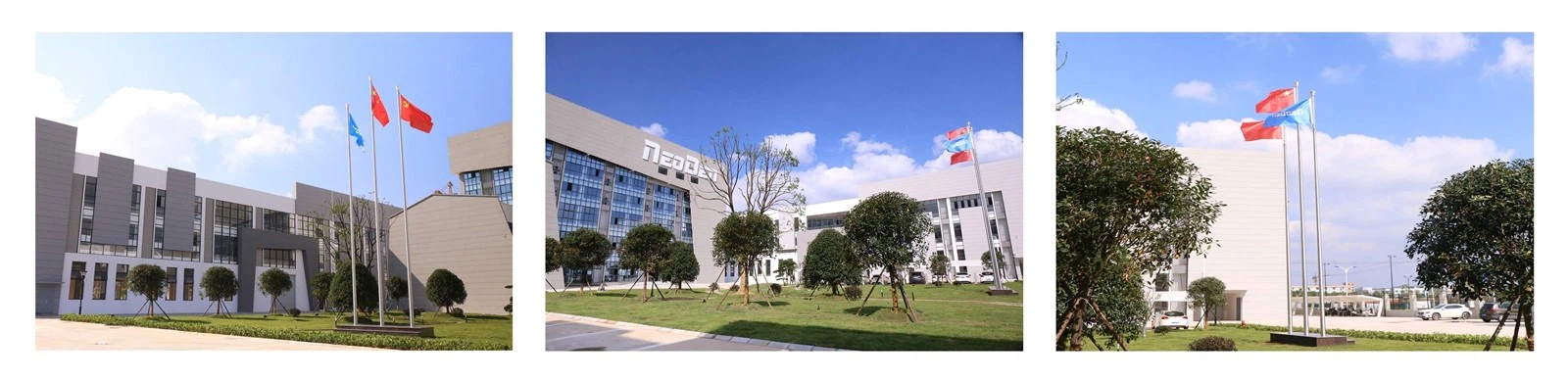
1) Established in 2010, 200 + employees, 27000+ Sq.m. factory.
2) NeoDen Products:Different Series PnP machines, NeoDen YY1, NeoDen4, NeoDen5, NeoDen K1830, NeoDen9, NeoDen N10P. Reflow Oven IN Series, as well as complete SMT Line includes all necessary SMT equipment.
3) Successful 10000+ customers across the globe.
4) 40+ Global Agents covered in Asia, Europe, America, Oceania and Africa.
5) R&D Center: 3 R&D departments with 25+ professional R&D engineers.
6) Listed with CE and got 70+ patents.
7) 30+ quality control and technical support engineers, 15+ senior international sales, for timely customer responding within 8 hours, and professional solutions providing within 24 hours.