
Introduction
Under the global "dual carbon" goals and the wave of energy structure transformation, the new energy industry is booming at an unprecedented pace. From photovoltaics, wind energy, and energy storage systems to new energy vehicles, the core of these technologies relies on precision and complex electronic control units. As the foundation of these electronic units, the technical capabilities and manufacturing processes of PCBA directly impact the performance, reliability, and cost of new energy equipment. Therefore, technological innovation in PCBA manufacturing facilities has become a key driver supporting the sustained high-speed development of the new energy industry.
I. The stringent challenges posed by the new energy industry to PCBA
The operating environment and performance requirements of new energy equipment present numerous new challenges for PCBA manufacturing:
- High reliability and long lifespan: Equipment such as photovoltaic inverters and wind power converters often need to operate in harsh outdoor environments for extended periods (up to 20-25 years), requiring PCBA to have extremely high resistance to high and low temperatures, humidity, salt fog, and vibrations.
- High Power and Heat Dissipation: PCBA processing for components such as battery management systems (BMS), motor controllers, and charging stations in new energy vehicles involves high current and voltage, posing severe challenges to the circuit board's current-carrying capacity, heat dissipation performance, and safety.
- High Integration and Miniaturization: Especially in new energy vehicles and portable energy storage devices, where space requirements are extremely stringent, PCBA is driven toward higher density and smaller size.
- Cost-effectiveness: The large-scale development of the new energy industry relies on effective cost control, which also requires PCBA processing to continuously seek more cost-effective solutions while ensuring performance.
II. PCBA Technological Innovation
In response to the unique demands of the new energy industry, PCBA factories are leveraging a series of technological innovations to provide robust support for industry development.
1. Application of Advanced Materials and Specialized Processes
To address requirements for high thermal conductivity and high voltage resistance, PCBA manufacturing increasingly employs ceramic substrates, metal substrates (such as aluminum or copper substrates), thick copper processes, and high-thermal-conductivity insulating materials. In terms of soldering materials, high-temperature, high-reliability solder is used, and processes such as vacuum reflow soldering are employed to reduce solder joint voids, thereby enhancing the heat dissipation efficiency and connection reliability of high-power components. Additionally, targeted three-proof coating processes and potting technologies have effectively improved the protective capabilities of PCBA in harsh environments.
2. Manufacturing technologies to enhance power density and integration
To achieve greater functionality within limited space, PCBA factories have introduced more precise SMT assembly technologies (such as 01005 component assembly and high-density BGA welding), embedded component technology (ECT), and advanced layered design and manufacturing capabilities. These advancements have effectively enhanced the integration and power density of PCBA processing, aligning with the trend toward miniaturization and lightweight design in new energy equipment.
3. Strengthening testing and quality control safeguards
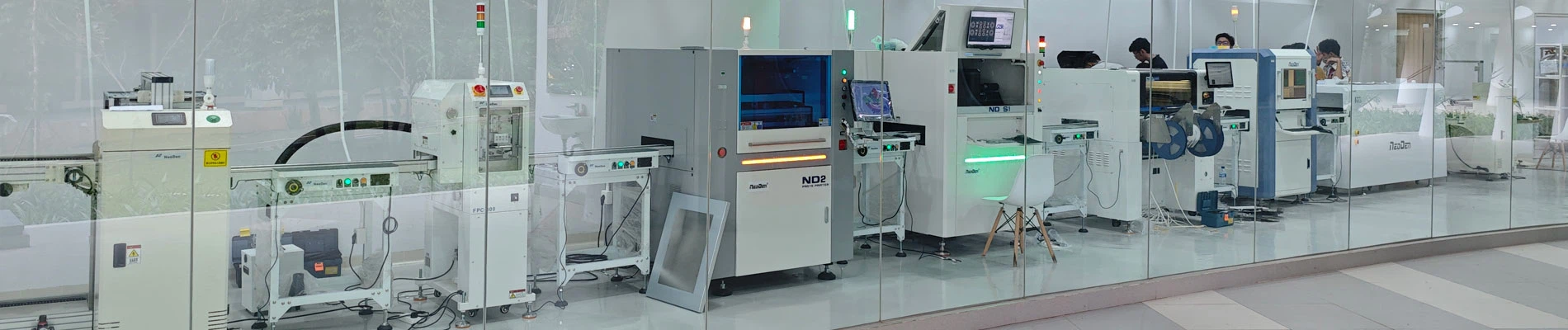
The high reliability requirements of new energy PCBA drive the upgrading of testing technologies. In addition to conventional SMT AOI machine and ICT (in-circuit testing), SMT X-ray inspection machine is introduced to ensure the quality of invisible solder joints such as BGAs, along with targeted high-voltage testing, insulation withstand voltage testing, functional aging testing, and thermal cycle impact testing, providing comprehensive quality assurance for PCBA processing.
4. Intelligent production and traceability management
The introduction of intelligent management systems such as MES (Manufacturing Execution System) and ERP (Enterprise Resource Planning) enables data monitoring, quality traceability, and efficiency optimization throughout the entire PCBA manufacturing process. This not only improves production consistency but also provides important references for quality management and issue identification throughout the entire lifecycle of new energy products.
III. Collaborative Innovation: Deep Integration with New Energy Enterprises
PCBA factory technological innovation is not developed in isolation. More importantly, it involves establishing an Early Supplier Involvement (ESI) collaboration model with new energy companies. From the early stages of product design, PCBA processing professionals actively participate, offering specialized advice on Design for Manufacturing (DFM), Design for Assembly (DFA), and Design for Testability (DFT). This optimizes design from the outset, balancing performance, cost, and reliability, thereby accelerating product R&D and time-to-market.
Conclusion
The future of the new energy industry deeply depends on technological breakthroughs across the entire supply chain. As a core component of electronic manufacturing, the technological innovation capabilities of PCBA processing are now influencing the performance boundaries and market competitiveness of new energy devices with unprecedented importance. Through continuous investment and breakthroughs in new materials, new processes, smart manufacturing, and collaborative development, PCBA factories will continue to inject strong momentum into the new energy industry, jointly driving the arrival of the green energy era. It can be said that every advancement in PCBA processing technology is contributing to the future of clean energy.

Company Profile
Zhejiang NeoDen Technology Co., Ltd. has been manufacturing and exporting various small pick and place machines since 2010. Taking advantage of our own rich experienced R&D, well trained production, NeoDen wins great reputation from the world wide customers.
with global presence in over 130 countries, the excellent performance, high accuracy and reliability of NeoDen PNP machines make them perfect for R&D, professional prototyping and small to medium batch production. We provide professional solution of one stop SMT equipment.