
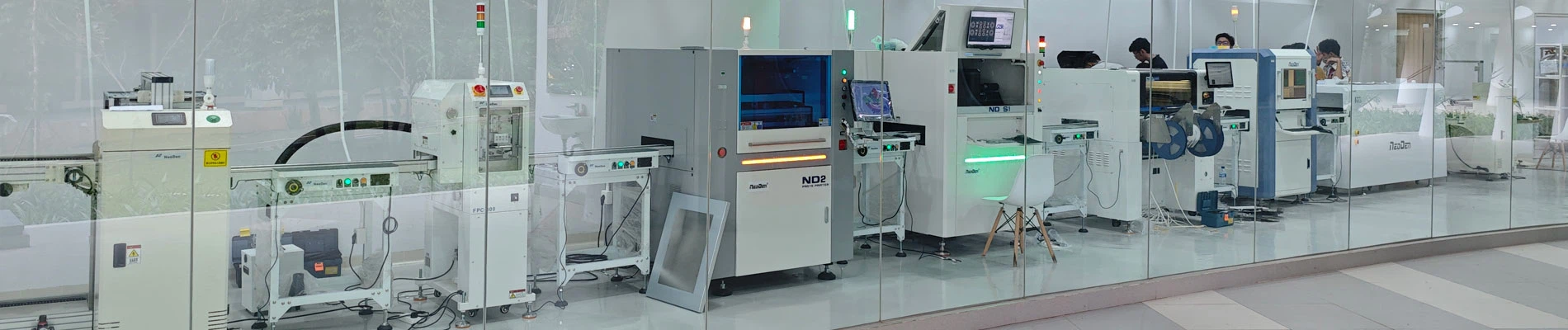
Introduction
In the SMT (Surface Mount Technology) production process, solder paste printing directly impacts the subsequent SMT machine placement and reflow oven soldering quality, ultimately affecting product yield and stability. Therefore, a fully automatic solder paste printer with stable performance, high precision, and high efficiency is crucial for the PCB production line.
This article will systematically analyze "how to choose the right fully automatic solder paste printer" from multiple perspectives, helping you make a scientific and reasonable decision.
I. Clarify Your Own Needs
Before purchasing a fully automatic solder paste printer, you must first clarify your factory's product type, production capacity requirements, and future development plans.
1. Product type determines printing precision requirements
Different industries have significantly different requirements for solder paste printing precision:
- Consumer electronics: Typically use micro-components, requiring extremely high printing precision, so high-precision models should be selected.
- Industrial control products: Relatively lower precision requirements but higher stability requirements, suitable for mid-to-high-end models.
- Automotive electronics products: Extremely high reliability requirements, so it is recommended to choose high-end brand equipment.
2. Production capacity determines equipment speed and automation level
If your PCB production line requires high-volume, high-speed production, you should prioritize equipment with the following features:
- High-speed squeegee movement mechanism
- Quick positioning and calibration system
- Automatic board loading/unloading functionality
- Support for MES system integration
If current production volume is low but there are expansion plans, modularly designed equipment can also be selected for easier future upgrades.

II. Core Technical Parameter Analysis
The core parameters of a fully automatic solder paste printer directly determine its performance. The following are several key indicators for reference:
1. Placement Accuracy
The printing accuracy of mainstream equipment ranges from ±25 to ±50 μm, with high-precision models achieving approximately ±15 μm. It is recommended to select the appropriate accuracy level based on product requirements.
2. Print Speed
Print speed is typically measured in "seconds per board," with common ranges between 6–12 seconds per board. Faster machines often feature advanced structures such as servo motor drive systems and pneumatic lifting platforms.
3. Vision System
The vision system determines printing consistency and repeatability. Common positioning methods include:
- Single-camera positioning (suitable for entry-level models)
- Dual-camera positioning (mainstream configuration)
- Multi-camera synchronous recognition (high-end models, suitable for complex PCBs)
Additionally, whether the system supports automatic mark point recognition, OCR recognition, and other functions is also worth considering.
4. Squeegee Pressure and Angle Adjustment Capability
During solder paste printing, the pressure and angle of the squeegee directly affect solder paste transfer rate and printing quality. High-quality equipment typically supports multi-level pressure adjustment, pneumatic or servo drive control, and can automatically adjust based on the program.
5. Stencil Cleaning
During solder paste printing, the stencil may retain solder paste, affecting subsequent printing quality. Cleaning systems are divided into three types: dry cleaning, wet cleaning, and vacuum cleaning. High-end equipment often comes with an intelligent cleaning system that can automatically determine whether cleaning is needed based on the number of prints.
III. Brand and After-Sales Service Selection: The Foundation for Long-Term Cooperation
1. Comparison of Domestic and International Brands
Currently, fully automatic solder paste printers on the market are primarily divided into three categories:
| Category | Representative Brands | Features |
| International Brands | Fuji NXT, Siemens SIPLACE, JUKI FX Series | High precision, excellent stability, but expensive with high maintenance costs |
| Chinese First-Tier Brands | ASM China, Jintuo, NeoDen, Nitto | High cost-effectiveness, quick service response, and comprehensive technical support |
| Small and Medium-Sized Brands | Various small and medium-sized enterprise brands | Low cost, but varying quality, and unstable after-sales service |
Recommendations should be made based on budget and requirements. For small and medium-sized enterprises, it is recommended to prioritize Chinese first-tier brands; if the budget is sufficient and extreme stability is sought, imported equipment can be considered.
2. The Importance of After-Sales Service
Once the equipment is put into use, post-installation maintenance and upkeep become particularly important. When selecting equipment, the following aspects should be considered:
Does it provide a localized after-sales service team?
Whether there is a comprehensive spare parts supply system
Whether regular maintenance and training services are provided
Whether the software is continuously updated and optimized
IV. Software Systems and Intelligent Functions: The Future Trend
With the advancement of smart manufacturing and Industry 4.0, modern fully automatic solder paste printers are increasingly focusing on the intelligence and data management capabilities of software systems.
1. User-Friendly Operating System
A good operating interface should be intuitive, easy to use, and customizable.
2. Data Collection and Analysis (MES Integration)
An increasing number of companies are beginning to prioritize data tracking and analysis during the production process. Equipment with MES integration capabilities can enable real-time upload of production data, anomaly alerts, and query of work records, thereby enhancing management efficiency.
3. AI-Assisted Recognition and Predictive Maintenance
Some high-end equipment has incorporated AI algorithms to automatically detect printing defects via image recognition technology, and even predict equipment failure risks, enabling early warnings and interventions to significantly reduce defect rates and maintenance costs.
V. Cost-Effectiveness Assessment
Cost-effectiveness is often the top concern for businesses, provided that basic functional requirements are met. It is recommended to conduct a comprehensive assessment based on the following aspects:
1. Initial Investment Costs
Including equipment purchase costs, transportation and installation fees, and initial commissioning expenses.
2. Operating Costs
Including consumable replacements (e.g., scrapers, steel screens), routine maintenance, and energy consumption. Some energy-efficient equipment may have slightly higher initial prices but lower long-term operating costs.
3. Return on Investment Period
Calculate the benefits brought by the equipment investment, such as improved efficiency, labor savings, and reduced defect rates, to assess the payback period. Generally, high-performance equipment has a shorter payback period.
VI. On-site visits and trial runs
Before finalizing the brand and model, it is recommended to conduct the following activities:
1. On-site visits to factories or customer case studies
Understand the equipment's performance in actual production environments, observe its operational stability, ease of use, and printing quality.
2. Trial runs
Request the supplier to provide a trial operation service, and personally operate and test core metrics such as printing accuracy, speed, and consistency. It is recommended to bring your own samples for testing, as the results will be more convincing.
3. Compatibility Testing with Existing Equipment
If you already have an SMT production line, you also need to test the compatibility of the new equipment with the existing equipment, such as whether it supports a unified software platform or can be integrated into the existing MES system.
Conclusion
When selecting a fully automatic solder paste printer suitable for your enterprise, it is not only important to consider current functionality and price but also to comprehensively evaluate long-term technological development, production efficiency, quality management, and other factors.
We recommend that enterprises combine their actual circumstances during the selection process, conduct thorough comparisons, make rational assessments, and seek professional advice when necessary to ensure that the selected equipment not only meets current needs but also supports future development.

Company profile
Zhejiang NeoDen Technology Co., LTD., founded in 2010, is a professional manufacturer specialized in SMT pick and place machine, reflow oven, stencil printing machine, SMT production line and other SMT Products. We have our own R & D team and own factory, taking advantage of our own rich experienced R&D, well trained production, won great reputation from the world wide customers.
We believe that great people and partners make NeoDen a great company and that our commitment to Innovation, Diversity and Sustainability ensures that SMT automation is accessible to every hobbyist on everywhere.