

Introduction
In modern electronics manufacturing, from state-of-the-art smartphones to complex industrial control boards, one core process is indispensable: reflow soldering. As electronic components continue to evolve toward miniaturization (e.g., 01005 components) and high integration (e.g., BGA and QFN packages), the quality of the reflow soldering process directly determines product yield and reliability.
For SMT factory procurement teams, electronics engineers, and startup manufacturers, a deep understanding of reflow soldering is not only a technical requirement but also key to reducing production costs and enhancing market competitiveness.

What is Reflow Soldering?
Reflow soldering refers to the process of using a controlled heating environment to melt solder paste pre-applied to the pads on a PCB, thereby establishing mechanical and electrical connections between the leads of surface-mount components and the pads.
It is called "reflow" because the solder paste undergoes a physical cycle within the heating oven, transitioning from a solid to a liquid state and then solidifying again upon cooling. It is the final and most critical soldering step in the SMT production line.
How does reflow soldering work? How does it achieve precise soldering?
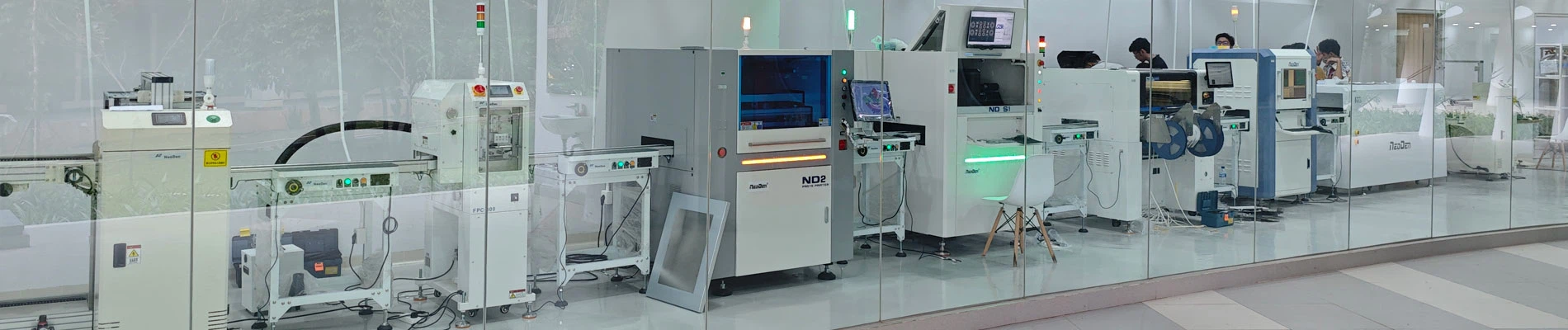
The core of reflow soldering lies in precise temperature control. In the SMT production line, the PCB sequentially passes through solder paste printing and SMT machine (component placement), before finally entering the reflow oven.
- Solder Paste Application: Solder paste consists of a mixture of tiny solder balls and flux.
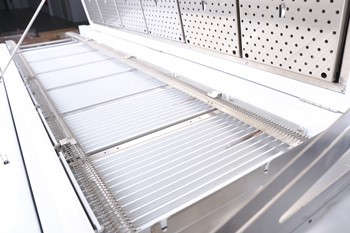
- Heat Transfer: Heating elements inside the oven transfer heat to the PCB via convection, infrared radiation, or gas-phase heating.
- Solder Paste Melting: When the temperature exceeds the solder paste's melting point, the molten solder, driven by surface tension, envelops the component leads and forms a solid solder joint upon cooling.
Differences Between Reflow Soldering and Wave Soldering: Which Should I Choose?
NeoDen has summarized the key comparisons below:
| Characteristics | Reflow Soldering | Wave Soldering |
| Applications | SMT Surface-Mount Components | DIP Through-Hole Components |
| Solder Source | Solder paste pre-printed on pads | Molten liquid tin bath (tin wave) |
| Complexity | High, requiring precise control of the temperature profile | Moderate, with a focus on wave height control |
| Suitable Applications | Modern miniaturized, high-density circuit boards | Traditional power boards, high-power equipment |
Recommendation: If your product contains a large number of surface-mount capacitors, resistors, or BGA chips, reflow soldering is the only option.
In-Depth Analysis: The 4 Key Stages of the Reflow Soldering Process
1. Preheat Zone
Purpose: To uniformly heat the PCB and components to 100°C – 150°C.
Key Point: The heating rate must be controlled at 1–3°C/s. Too fast a rate can cause ceramic capacitors to crack, while too slow a rate can lead to premature flux degradation.
2. Soak Zone
Purpose: To eliminate temperature variations on the board and ensure that large and small components reach the same starting temperature.
Key Points: The flux becomes active during this stage, removing oxidation from the pads. This stage typically lasts 60–120 seconds.
3. Reflow Zone
Objective: The oven temperature rises to its peak temperature.
Key Points: For lead-free solder paste, the peak temperature is typically 235°C–250°C. The Time in Liquid (TAL) should be maintained between 45–90 seconds to ensure proper growth of intermetallic compounds (IMCs).
4. Cooling Zone
Purpose: Rapid cooling causes the solder to solidify.
Key Point: A faster cooling rate (3–4°C/s) produces a finer crystal structure, resulting in stronger, more durable joints with a brighter surface finish.
Why is reflow soldering critical to modern SMT production?
As a factory decision-maker, you need to understand the ROI of this technology from a business perspective:
- Adaptability to extreme miniaturization: Reflow soldering leverages the self-alignment effect of liquid solder to correct minor misalignments during placement, which is essential for handling 0201 components and even smaller ones.
- Exceptional soldering yield: Compared to manual soldering, automated reflow ovens significantly reduce defects such as cold solder joints and cold solder, greatly lowering post-production rework costs.
- Support for high-density layouts: It is the foundation for double-sided SMT processes, helping you integrate more functionality into smaller PCB spaces.
How to Choose the Right Reflow Oven for Your Factory?
When selecting equipment, avoid blindly pursuing "multiple temperature zones." Decisions should be based on your actual product mix and budget.
1. Desktop Reflow Ovens vs. Large Reflow Ovens
- Desktop models (e.g., NeoDen IN6): Suitable for prototype development, laboratory testing, or small-batch production. Their advantages include a small footprint, low power consumption, and excellent cost-effectiveness.
- Automatic orbital reflow soldering (e.g., NeoDen IN12C): Featuring 8–12 or even more temperature zones, these are suitable for 24/7 large-scale assembly lines. They offer exceptional temperature control stability and support faster conveyor belt speeds.
2. Three Technical Parameters to Prioritize When Purchasing
- Temperature Control Accuracy: A high-quality machine should maintain a temperature variance of ±1°C or less.
- Heating Technology: Prioritize Full Convection, as its thermal uniformity far surpasses that of earlier infrared heating systems.
- Built-in Filtration System: The reflow process generates flux fumes. Machines equipped with a built-in exhaust filtration system better meet environmental standards and protect internal sensors.
FAQ
Q1. Why does "tombstoning" occur after reflow oven?
A: This is typically caused by excessive temperature differences at the ends of the pads or uneven solder paste printing, leading to an imbalance in surface tension. Optimizing the uniformity of the preheating zone is key to resolving this issue.
Q2. Can lead-free and leaded reflow soldering share the same oven?
A: Theoretically, yes, but lead-free processes require higher peak temperatures (approximately 30°C–40°C higher). Long-term lead-free soldering places higher demands on the equipment's heat resistance and power capacity.
Q3. How do I determine how many temperature zones my reflow oven needs?
A: For simple boards (single-sided, large components), 5–6 temperature zones are sufficient. For complex medical or aerospace-grade PCBs (multi-layer boards, BGAs), we recommend selecting 8 temperature zones or more to achieve a smoother, more stable temperature gradient.

Conclusion: The First Step Toward Efficient SMT Manufacturing
For electronics manufacturers seeking to reduce costs and improve product quality, mastering the temperature control logic of reflow soldering and selecting the right equipment is the cornerstone of success.
If you are planning your first SMT production line or looking to upgrade your existing soldering process, choosing an equipment supplier with proven technical expertise is crucial.
Improve Your Soldering Yield-Start Now
With over a decade of deep expertise in the SMT industry, NeoDen is dedicated to providing efficient and stable reflow soldering solutions to customers worldwide.
Looking for a compact reflow oven suitable for laboratory use? [View NeoDen IN6 Product Details]
Need an industrial-grade reflow oven capable of high-volume production? [Contact our professional sales team to request a configuration sheet]