
Introduction
In today's highly integrated electronics manufacturing landscape, SMT has become the mainstream process. Whether in smartphones, laptops, industrial control boards, or automotive electronic systems, their core circuit boards almost universally rely on SMT technology to achieve high-density, high-reliability assembly. So, what exactly is the SMT production process? What key steps does it encompass? And how should one select suitable equipment to ensure high-quality, efficient production?
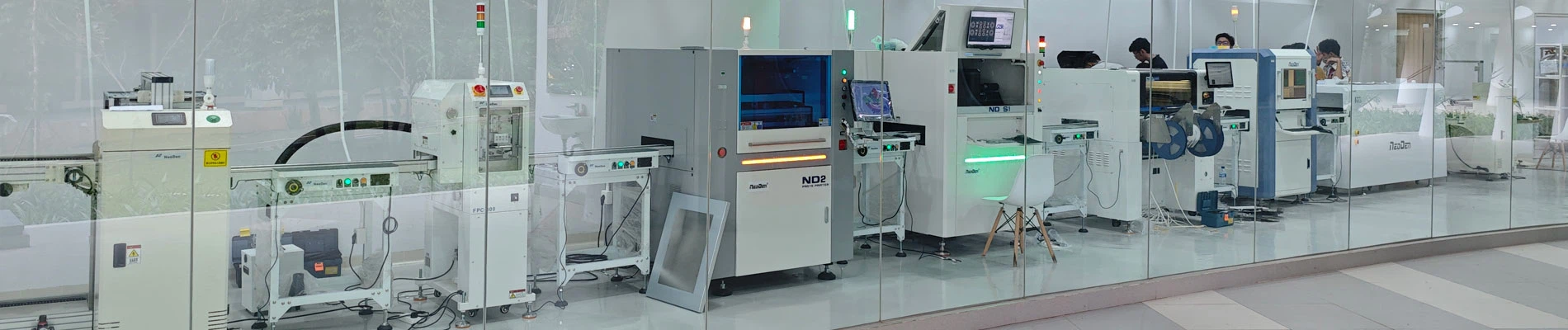
This article will take you through a comprehensive analysis of the complete SMT production process. By integrating practical applications of NeoDen series equipment (FP2636 Manual Solder Paste Printer, YY1 Automatic Placement Machine, IN6 Reflow Oven), it aims to help electronics manufacturers, makers, educational institutions, and small-batch production lines fully master this core technology.

I. What is the SMT Production Process?
The SMT production process refers to the complete procedure of precisely mounting surface-mount components onto PCBs using automated or semi-automated equipment, followed by forming reliable electrical connections through reflow soldering. Compared to traditional through-hole technology (THT), SMT eliminates drilling, utilizes smaller and lighter components, and supports dual-sided mounting, significantly enhancing circuit board integration and performance.
1. A standard SMT production line typically comprises three core stages:
2. Below, we will detail each step and explain how NeoDen equipment plays a critical role in each.
Step 1: Solder Paste Printing - Precise Foundation for Soldering Quality
Solder paste printing is the first step in the SMT process and is critical for determining final soldering quality. Its purpose is to precisely apply the correct amount of solder paste evenly onto the pads of the PCB through a stencil.
Key Challenges:
- Solder paste thickness control (typically 0.1–0.15mm)
- Printing alignment accuracy (requiring fine adjustments in X/Y/angle)
- Tight fit between the stencil and PCB
Advantages of the NeoDen FP2636 Manual Solder Paste Printer:
The NeoDen FP2636 is a manual printer specifically designed for small-batch production, prototyping, and educational applications. Its core advantages include:
- High-Precision Adjustment System: Equipped with X-axis, Y-axis, and angle adjustment handles, combined with height indicators and stencil clamping plates, achieving ±0.01mm alignment accuracy.
- Compatibility with Frameless Stencils: Rapid clamping via front/rear clamping plates and 8 screws saves costs and allows flexible stencil changes.
- User-Friendly Design: Multi-size PCB positioning pins (2mm/2.5mm/3mm) and L-shaped base adapt to various board types; top support pins prevent PCB warping.
- Operating Note: Before use, remove solder paste from a 3–8°C refrigerator. Allow it to warm up for over 4 hours and manually stir for 2–5 minutes (2–3 seconds per rotation) to ensure good flowability. Failure to do so may cause poor solder paste flow, insufficient hole filling, and result in cold solder joints or solder balls.
Step 2: Component Placement - Millimeter-Level Precision for High-Speed Accurate Placement
Following solder paste printing, the next step involves precisely placing SMD components (such as resistors, capacitors, IC chips, etc.) onto their corresponding pads. This process is performed by a pick and place machine.
Key Challenges:
- Micro-component recognition (e.g., 0201, 0402 packages)
- Placement accuracy (typically requiring ±0.05mm tolerance)
- Compatibility with Multiple Feeding Methods (Tape-and-Reel, Bulk, Tubes, etc.)
Core Capabilities of the NeoDen YY1 Pick and Place Machine:
- The NeoDen YY1 is a cost-effective dual-head automatic pick and place machine suitable for small to medium-volume production and R&D scenarios:
- Intelligent Vision Recognition System: Equipped with top-view and bottom-view cameras, supporting automatic recognition and alignment of various components from 0201 to large BGAs.
- Multi-Feed Compatibility: Supports tape feeders (1–52), vibratory feeders, IC trays, short tape feeds, and more for flexible material handling.
- Automatic Nozzle Switching: Simultaneously loads 4 different nozzle types (e.g., CN040 for 0402, CN220 for SOP ICs) with zero manual intervention.
- User-Friendly Interface: Coordinates imported via CSV files, with "Step-by-Step" trial placement mode significantly lowering operational barriers.
- Maintenance Recommendations: Maintain nozzle cleanliness, avoid oxidized components, and operate in a constant temperature/humidity environment to substantially improve placement success rates. Regular calibration of the camera and nozzle center is crucial for long-term precision.
Step 3: Reflow Oven Soldering - Precise Temperature Control for Reliable Joints
After placement, the PCB enters the reflow oven. A precisely controlled temperature profile melts the solder paste, wetting the pads and component leads. Upon cooling, this forms a robust metallic bond.
The four stages of reflow soldering machine:
- Preheat Zone: Slow heating (1–2°C/s) to evaporate solvents and activate flux.
- Soak/Active Zone: Stable temperature (150–180°C) to equalize PCB and component temperatures.
- Reflow/Peak Zone: Rapid heating to peak temperature (typically 210–230°C) to melt solder paste and form joints.
- Cooling Zone: Rapid cooling to solidify joints and prevent grain coarsening.
Technical Highlights of the NeoDen IN6 Reflow Oven:
The NeoDen IN6 is a 6-zone full hot-air convection reflow oven delivering industrial-grade performance in a desktop footprint:
- 6 independent temperature zones (3 top/3 bottom) with ±0.2°C stability, supporting both lead-free and leaded processes.
- Full Hot-Air Circulation System: Utilizes Japanese NSK motors and Swiss heating elements for uniform hot-air distribution, preventing soldering defects caused by "shadow effects."
- Intelligent Interface: Supports saving/recalling multiple temperature profiles (TAB function) with one-click loading of preset parameters.
- Built-in Fume Filtration System: Effectively purifies soldering fumes, safeguarding workshop environments and operator health.
- Curve Tuning Tips: During initial use, attach a thermometer to critical PCB points to measure actual board temperature curves. If solder balls appear, reduce preheat slope. If cold solder joints occur, extend reflow time or increase peak temperature.
II. Quality Control & Troubleshooting
Even with standardized processes, soldering defects may occur. Common issues include:
- Solder Balls: Inadequate paste mixing or excessive heating rate → Improve mixing and reduce preheat speed.
- Component Misalignment: Excessive placement pressure or airflow disturbance → Optimize placement parameters and inspect nozzle vacuum.
- PCB Warpage: Significant temperature differential between upper and lower zones → Balance heating power and increase conveyor belt speed.
- Bridging: Excessive stencil aperture size or excessive solder paste → Optimize stencil design, control printing thickness.
Through the NeoDen FP2636's precision printing, NeoDen YY1's stable placement, and NeoDen IN6's reliable reflow, the NeoDen equipment combination significantly reduces defect rates and improves First Pass Yield.
III. Why Choose the NeoDen Equipment Combination?
For startups, labs, educational institutions, or small-batch manufacturers, NeoDen offers a cost-effective, easy-to-operate, and low-maintenance SMT solution:
FP2636 + YY1 + IN6: Three machines working in tandem to cover the entire SMT process.
Achieve professional-grade production without massive investment.
Chinese/English interface, detailed manuals, and localized technical support reduce learning costs.
Conclusion
While SMT production may seem complex, anyone can efficiently assemble high-quality PCBs by understanding its core principles-precise printing, reliable placement, and scientific reflow-and pairing them with suitable equipment.
If you're seeking SMT equipment for prototyping, small-batch production, or educational experiments, NeoDen's FP2636, YY1, and IN6 are undoubtedly the ideal choice. Not only are they reliable in performance, but they also balance ease of use with scalability, helping you advance steadily on your electronics manufacturing journey.
Take action now: Visit the NeoDen official website to access detailed technical specifications and customized solutions for the FP2636, YY1, and IN6. Elevate your SMT production line from "capable" to "excellent"!