

Introduction
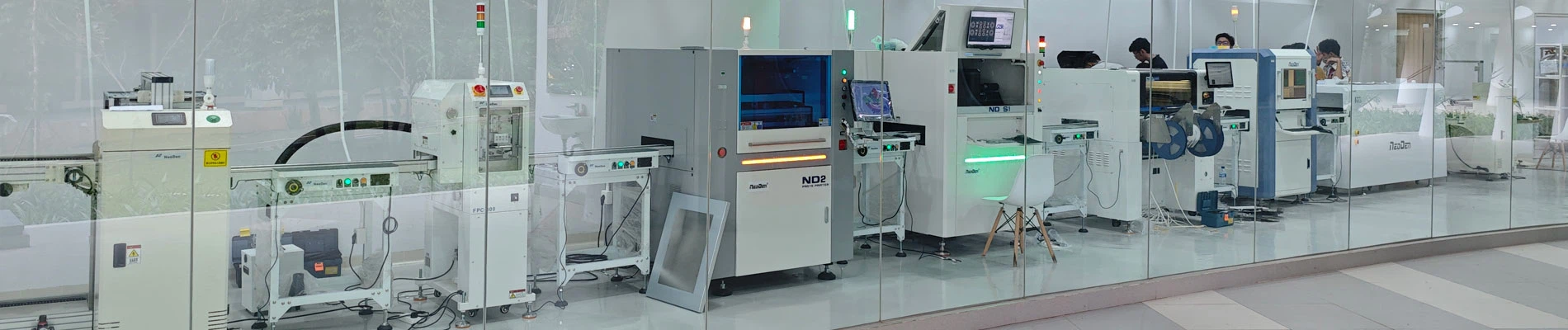
When setting up a small-batch SMT assembly line, many engineers and procurement professionals tend to allocate the majority of their budget and effort to the SMT placement machines. However, process data from the SMT industry indicates that as much as 60% to 70% of PCB assembly defects-such as bridging, insufficient solder, missing solder joints, and voids-actually originate from the solder paste printing stage. So, how do you choose a solder paste printer that fits within a limited budget while still meeting process accuracy requirements?
This guide will objectively compare 5 representative solder paste printers suitable for small-scale production from both a purely technical and practical perspective.

How to Choose the Right SMT Stencil Printer?
Before examining specific models, evaluate whether the equipment meets your needs based on the following six core process metrics:
- Alignment Accuracy: Check its mechanical or vision-based alignment system. For fine-pitch components (<0.5 mm pitch) or 0402 packages, printing alignment accuracy must consistently fall within the range of ±0.02 mm to ±0.05 mm.
- PCB Size Compatibility: Ensure that the printing platform's working area and fixture range can accommodate your largest PCB designs, and consider whether you have requirements for long or irregularly shaped boards.
- Level of Automation: Solder paste printers are categorized as manual, semi-automatic, and fully automatic. Automation primarily addresses the consistency of squeegee pressure and speed.
- Changeover Efficiency: In small-batch production, the time spent setting up the equipment often exceeds the actual printing time. Prioritize models that support frameless stencil clamping and feature adjustable PCB support pins to reduce changeover time for a single order to less than 10 minutes.
- Ease of Use and Process Adjustment: An intuitive user interface or control software allows operators to digitally adjust squeegee pressure, printing speed, de-molding speed, and delay settings directly, without the need for complex engineering programming.
- Equipment ROI: Evaluation metrics should not focus solely on purchase cost but should also account for the reduction in post-soldering rework hours and component waste resulting from improved print quality.
5 Best Cost-Effective Solder Paste Printers for Small-Batch PCB Assembly
1. NeoDen FP2636 manual stencil printer
- Best Suited For: R&D laboratories, university electronics training labs, and early-stage prototype PCB hardware validation in enterprises.
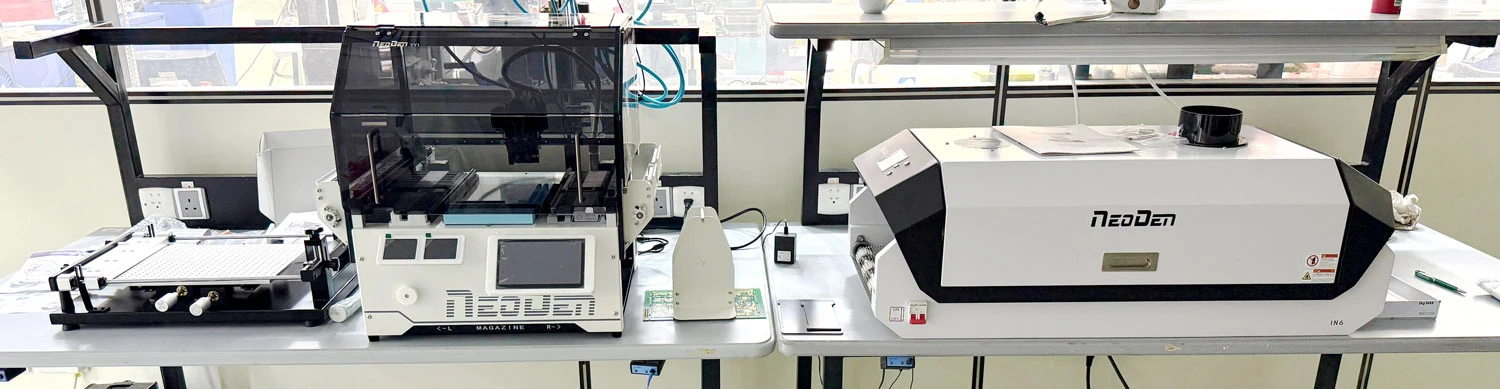
- Process Features: Features a lead screw T-handle for mechanical fine-tuning along the X, Y, and θ axes, facilitating manual alignment. Supports frameless stencils, eliminating logistics and tooling costs associated with custom-made framed stencils. Includes dual-sided scale references for quick positioning.
- Limitations: Solder paste application and stencil removal are entirely manual; production speed and solder paste deposit consistency depend on the operator's skill and technique.
- Reasons for Selection: Compared to common single-sided fixtures or simple stencil printing stations found online, this model offers superior mechanical rigidity and fine-tuning mechanisms for alignment, meeting the manual printing requirements for 0603 components and standard ICs.

2. NeoDen YS350 semi-auto solder paste printer
NeoDen YS350 is an industrial-grade semi-automatic stencil printer that uses motor-controlled squeegee travel to address the most difficult-to-control process variables in manual printing.
| NeoDen YS350 Core Process Parameters Overview | |
| Maximum Printing Area | 400 x 240 mm |
| Printing Speed | 0–100 mm/s (adjustable) |
| Repeatability | ±0.2 mm |
| Squeegee Configuration | Dual-squeegee design (supports stainless steel/rubber squeegees) |
- Ideal for: Small EMS factories and electronics companies entering the small-batch, small-scale commercial production phase.
- Process Features: A motor-driven, programmable dual-squeegee system ensures uniform solder paste application and consistent paste thickness, precision guide rails combined with speed control ensure a smooth demolding process, effectively reducing tip formation and edge collapse on fine-pitch pads.
- Limitations: Manual handling is required for PCB feeding, alignment, clamping, and unloading.
- Reasons for Selection: Offers practical repeatability (±0.02 mm), has a small footprint, and features low purchase and maintenance costs, making it a core component for small production lines.
3. DEK Horizon 03iX
- Ideal for: Mid- to high-end EMS companies with extremely high standards for manufacturing processes, as well as defense and aerospace electronics laboratories.
- Process Features: The equipment's repeatability standard reaches > 2.0 Cmk @ ±20 μm (±6σ). Supports fully automated stencil tension monitoring.
- Drawbacks: The equipment requires a significant capital investment and has a large footprint; for typical small-batch projects, its high maintenance and spare parts costs can prolong the return on investment cycle.
- Typical Applications: Process validation and small-batch, high-standard production of aerospace onboard equipment and multi-layer high-end 5G/6G communication boards.
4. Yamaha YSP20
- Ideal for: Growing mid-to-high-end enterprises seeking ultimate line-change flexibility, where product lines frequently switch between large-size boards and small-size, fine-pitch components.
- Process Features: Compatible with a variety of challenging printing processes (high-speed and fine-pitch printing), supports clamping of large-size substrates and large-size stencils, features a logically organized user interface and an extensive range of optional configurations (such as automatic cleaning and integration with 3D solder paste inspection).
- Drawbacks: The base model is not inexpensive, and with numerous optional features, the total cost can be relatively high if all advanced closed-loop functions are included.
- Reasons for Selection: The consistent stability and excellent ergonomic design typical of Japanese equipment provide exceptional production flexibility when addressing the high-mix, high-frequency changeover demands of consumer electronics and the Internet of Things (IoT).
5. NeoDen ND450 automatic solder paste printer
- Ideal for: Small EMS factories seeking stable first-pass yield, high-tech hardware R&D centers, and growing electronics companies requiring highly repeatable commercial-scale batch production.
- Process Features:
- Electrically Controlled Air-Suspension Squeegee Head: Through innovative electrical control and pneumatic circuit design, it continuously monitors squeegee pressure in real time, ensuring absolutely stable pressure throughout the entire printing stroke and eliminating solder shortages or solder bridges caused by uneven squeegee force at the source.
- High-Precision Intelligent Alignment System: Featuring an integrated top-view/bottom-view dual-camera design, coupled with 6-channel adjustable lighting, it adapts to PCBs and stencil mark points made of various reflective materials; simultaneously, the camera gantry is fully equipped with a high-precision Magnetic Grating Feedback Module, ensuring ultimate precision and stability throughout the entire printing process.
- Industrial-Grade Stability and Rigidity (Heavy-Duty CNC Machining): Both the stencil mounting frame and the fully automatic lifting platform are precision-machined using CNC technology to ensure absolute flatness. The left and right crossbeams utilize high-precision linear guides, achieving zero front-to-back backlash when locked. Simultaneously, the 3-axis PCB adjustment platform features a dedicated lead screw-nut backlash elimination mechanism, ensuring precise and error-free PCB positioning every time.
- Advanced Stencil Cleaning: Equipped with an independent spray module, the stencil bottom cleaning module utilizes a high-torque gearmotor and a flexible lifting mechanism, combined with negative pressure suction generated by a high-speed fan, to ensure highly efficient cleaning.
- Disadvantages: As a fully automatic in-line machine, it must be integrated with upstream and downstream transfer stations and conveyor belts to operate within an assembly line. It is not suitable for manual quick printing and prototyping of individual boards.
- Reasons for Selection: The ND450 is designed for small-batch, high-precision production lines. It incorporates practical technologies from leading industrial brands-such as closed-loop feedback via magnetic encoders, backlash elimination mechanisms, and electronically controlled air-float squeegees-offering excellent value for money.
- Typical Applications: High-precision, fully automated small- to medium-batch production of automotive electronics, medical-grade control boards, smart wearable devices, and high-end multilayer PCBs.
Manual vs. Semi-Automatic vs. Premium Automatic Printers
To help you make more informed decisions, we've conducted an in-depth, process-level comparison of equipment across different budget ranges and automation levels:
| Evaluation Dimensions / Metrics |
 |
 |
 |
| Model number | NeoDen FP2636 | NeoDen YS350 | NeoDen ND450 |
| Squeegee Control System | Purely manual, handheld operation; pressure and angle are random | Motor-driven automatic translation; speed and stroke are adjustable | Electronically controlled air-cushioned squeegee head (closed-loop pressure monitoring) |
| Alignment Calibration Method | Mechanical knob fine-tuning + visual inspection | Precision mechanical fine-tuning + strong locking | Dual-camera intelligent alignment + magnetic scale feedback system |
| Mechanical backlash elimination and rigidity | Basic rigid structure | Standard fixed locking | CNC crossbeam + lead screw/nut backlash elimination mechanism (zero backlash) |
| Automatic stencil cleaning | None | None | High-efficiency vacuum suction + flexible lifting automatic wiping system |
| Typical Daily Output | 10–50 boards | 200–800 boards | 1,500–4,000 boards (in-line, non-stop) |
| Micro-Component Handling Capability | Standard components such as 0805, 0603 | 0402, standard micro-pitch QFN | 0201, 01005, ultra-high-density pitch BGA / CSP |
| Capital Investment Level | Very Low | Moderate | High |
| Core Application | Individual engineer prototyping / low-budget validation | Optimal balance for small factories / pilot production lines | Automated small- to medium-volume production lines requiring high precision and high yield |
FAQ
Q1: Why does my small-volume production line need to be upgraded to a semi-automatic or fully automatic screen printer? Isn't manual operation sufficient?
A: The key lies in "process parameter consistency." Automated control locks in the squeegee angle, travel speed, and vertical release speed. This completely eliminates the variability inherent in manual operation. The volume and geometry of the solder paste on each pad remain consistent, thereby fundamentally preventing hidden defects such as solder bridges and cold solder joints that can occur after reflow soldering.
Q2: What thickness of stencil is typically recommended for small-batch PCB assembly?
A: Generally, mixed-component boards use 0.1 mm or 0.12 mm thick laser-cut stainless steel stencils. If your board contains extremely fine-pitch BGAs (e.g., pitch ≤ 0.4 mm), you'll need to calculate based on the aspect ratio formula, fine-tune the pad openings specifically, and use a 0.08 mm or thinner stencil.
Q3: How long does it take to changeover on this equipment for small-batch production?
A: Thanks to user-friendly mechanical and electrical design, on NeoDen's semi-automatic or fully automatic equipment-such as the ND450 stencil holder with dual-action pneumatic cylinder locking-stencil replacement, width adjustment, and calibration can typically be completed independently in under 10 minutes.
Q4: How should I clean the stencil during low-volume production?
A: Manual models require manual wiping. Fully automatic equipment, such as the NeoDen ND450, features a built-in automatic wiping system combining a high-torque gear motor and a negative-pressure blower. This system automatically and thoroughly cleans the underside of the stencil according to preset dry-wipe, wet-wipe, and vacuum combination modes, significantly reducing labor and extending the cleaning cycle.
Q5: What kind of technical support does NeoDen provide for its SMT production line equipment overseas?
A: NeoDen has a comprehensive global support system. We provide detailed video tutorials, user manuals in English, and online expert troubleshooting services. We also maintain a network of localized distributor services in multiple overseas regions to ensure your small-batch SMT production line operates efficiently from the very first day of installation.

Conclusion
If your business is in the early stages of R&D and prototyping, or if you're a startup with limited funding, a precision manual machine like the NeoDen FP2636 solder paste printer offers exceptional value for money. However, if your goal is to achieve mass production and you seek the ultimate in industrial automation and precise component alignment, upgrading to the NeoDen ND450 fully automatic printer-featuring an electronically controlled air-cushioned squeegee and a closed-loop magnetic scale system-will be a wise choice to reduce defect rates and achieve the highest ROI.