
Introduction
In today's rapidly evolving electronics manufacturing industry, SMT has become the core process for electronic assembly. Whether for consumer electronics, industrial control equipment, automotive electronics, or medical devices, SMT production lines play a crucial role. This article systematically outlines key considerations for selecting SMT production line equipment, helping you make informed, efficient, and sustainable investment decisions.
I. Define Production Requirements
Before purchasing SMT equipment, the primary task is to clarify your production needs. Enterprises of different scales and product types have vastly different equipment requirements. We recommend self-assessment across the following dimensions:
1. Product Type and Complexity
Are you primarily manufacturing mobile phone motherboards, power modules, LED light boards, or high-density communication equipment? The more complex the product, the higher the demands on placement accuracy and component compatibility (e.g., 01005, BGA, QFN). High-precision products require pick and place machines equipped with high-resolution vision systems and stable motion control.
2. UPH
How many PCBs must be produced per hour? Is it small-batch, high-variety production or large-scale standardized manufacturing? High-speed placement machines suit mass production, while multi-functional models better accommodate flexible, small-to-medium batches with diverse product types.
3. Production Cycle Time and Line Change Frequency
If frequent product changeovers occur, prioritize equipment supporting rapid line changes and intelligent program management to minimize downtime and enhance Overall Equipment Effectiveness (OEE).
4. Automation Requirements
Do you plan to integrate fully automated loading/unloading, AOI (Automated Optical Inspection), SPI (Solder Paste Inspection), and pick-and-place coordination? Pre-planning automation integration capabilities facilitates future production line upgrades.

II. Core SMT Equipment Analysis: How to Select Key Components?
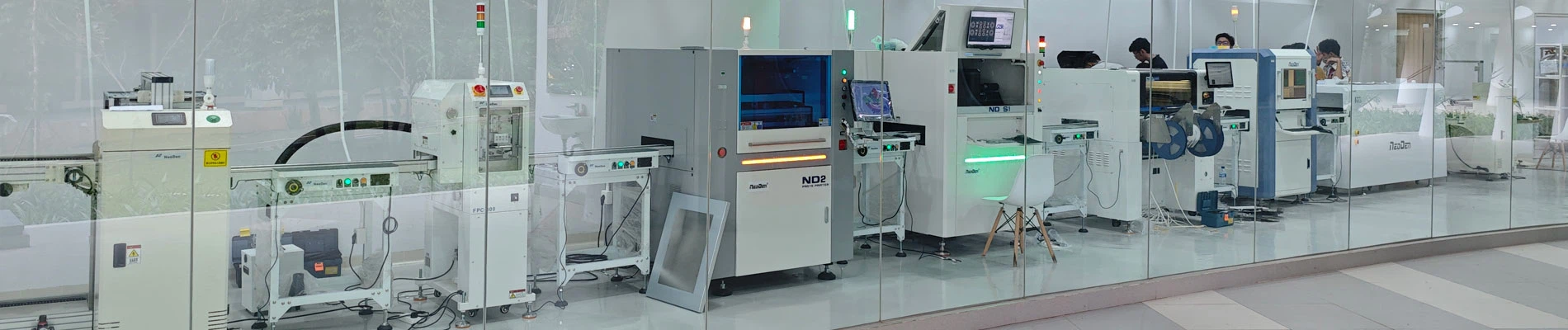
A complete SMT production line typically includes the following core equipment, each with specific technical parameters and selection criteria:
1. Solder Paste Printer
Function: Precisely deposits solder paste onto PCB pads.
Selection Recommendations:
- For high-density boards, choose printers with high precision (±25μm tolerance) and 3D SPI inspection capability.
- Evaluate squeegee control systems, stencil cleaning frequency, and vision alignment accuracy (e.g., 5-point or 9-point calibration).
- In dusty production environments, consider enclosed printers to enhance solder paste stability.
2. Pick and Place Machine
The core of the SMT line, its performance directly impacts production efficiency and yield.
Type distinctions:
- High-speed pick and place machines: Suitable for standard components (resistors, capacitors, SOPs), achieving tens of thousands of placements per hour.
- Multi-functional Pick and Place Machine: Handles complex components like irregularly shaped parts, BGAs, and connectors. Relatively slower but highly flexible.
- Medium-speed Pick and Place Machine: Balances speed and versatility, suitable for moderately complex products.
Key Parameters:
- Placement Accuracy (Typically within ±50μm. high-end models achieve ±25μm)
- Component Range (Minimum placement: 01005. Maximum placement: irregularly shaped components)
- Nozzle types and auto-change capability
- Vision system (support for multi-cameras, in-flight alignment)
Tip: For high-mix low-volume production, choose models with rapid program import and intelligent feeder management to boost line change efficiency.
3. Reflow Oven
Function: Melts solder paste and forms reliable joints using hot air or nitrogen environments.
Selection Criteria:
- Number of Temperature Zones: 4-8 zones for general products. 8+ zones recommended for high-density boards.
- Temperature Control Accuracy: Preferably within ±1°C.
- Nitrogen (N₂) Protection Support: Reduces oxidation and improves solder joint reliability, especially for lead-free soldering or high-demand products.
- Cooling Method: Rapid cooling enhances solder joint structure.
4. AOI (Automated Optical Inspection) and SPI (Solder Paste Inspection)
- SPI: Inspects paste volume, height, and offset after printing to prevent subsequent soldering defects.
- AOI: Detects missing components, misalignment, polarity errors, etc., after reflow soldering.
Recommendation: Configure based on product yield targets. High-reliability products (e.g., automotive electronics) should adopt 3D AOI for enhanced detection accuracy.
III. Equipment Brand and Supplier Selection
Equipment selection involves not only comparing technical specifications but also evaluating the supplier's long-term service capabilities.
1. Brand Reliability
International top-tier brands (e.g., Siemens, FUJI, YAMAHA) offer mature technology but come at a higher price point.
Chinese-manufactured equipment (e.g., NeoDen, Hanwha, JT Automation) has gained significant advantages in cost-effectiveness and after-sales service in recent years, making it suitable for the mid-range market.
2. After-Sales Support
- Is there an in-house technical support team?
- Is spare parts supply timely?
- Are operator training and maintenance services provided?
Practical insight: Equipment lifecycles span 8-10 years, making service quality critical for production line stability.
3. Software & Smart Features
Modern SMT equipment typically includes MES interfaces, remote monitoring, and fault prediction systems. Selecting Industry 4.0-compatible devices facilitates future digital factory integration.
IV. Cost Analysis
SMT line investments are substantial, necessitating rational evaluation.
1. Initial Investment vs. Long-Term Benefits
High-speed equipment is costly but offers lower unit production costs, ideal for high-volume manufacturing.
Multi-functional equipment provides greater flexibility, suitable for companies with rapid product iteration cycles.
2. Consider Hidden Costs
Energy consumption (e.g., power usage of reflow ovens)
Maintenance expenses (e.g., nozzle, camera, and belt replacement frequency)
Training costs and operator learning curve
V. Future Compatibility and Scalability
Technology evolves continuously-your equipment should possess "growth potential."
- Modular design: Does it support adding feeder tracks or upgrading vision systems later?
- Software Upgrade Capability: Can new component types or processes be supported through software updates?
- Production Line Expansion: Is integration with other equipment (e.g., transfer stations, automatic board collectors) straightforward?
Conclusion
SMT equipment selection should prioritize "the best fit for your production environment." During decision-making, we recommend:
- Define your requirements and create an equipment selection checklist.
- Conduct on-site factory visits to observe equipment in operation.
- Engage in thorough discussions with suppliers to understand after-sales service details.
- Consider long-term development and reserve room for future upgrades.
As a professional SMT equipment manufacturer, we are committed to providing customers with cost-effective, highly stable automation solutions. Whether you are a startup or an established manufacturer, we can tailor the most suitable SMT production line configuration for your needs. If you are planning a new production line or upgrading existing equipment, please contact us for free equipment selection consultation and solution design services.
Quick facts about NeoDen
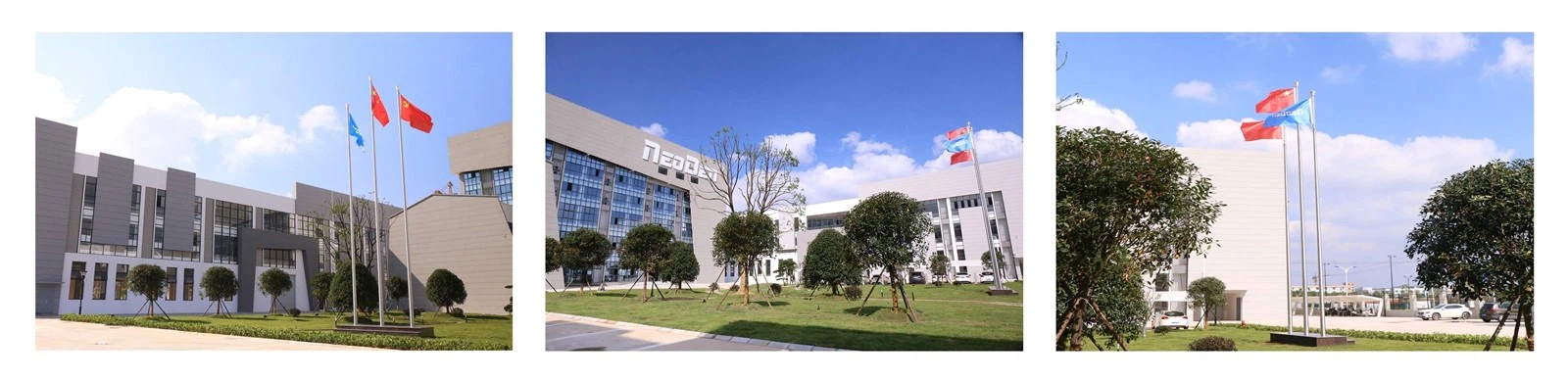
1) Established in 2010, 200 + employees, 27000+ Sq.m. factory.
2) NeoDen Products:Different Series PnP machines, NeoDen YY1, NeoDen4, NeoDen5, NeoDen K1830, NeoDen9, NeoDen N10P. Reflow Oven IN Series, as well as complete SMT Line includes all necessary SMT equipment.
3) Successful 10000+ customers across the globe.
4) 40+ Global Agents covered in Asia, Europe, America, Oceania and Africa.
5) R&D Center: 3 R&D departments with 25+ professional R&D engineers.
6) Listed with CE and got 70+ patents.
7) 30+ quality control and technical support engineers, 15+ senior international sales, for timely customer responding within 8 hours, and professional solutions providing within 24 hours.