
Baseband chip
Introduction
The baseband chip can be divided into five sub-blocks: CPU processor, channel encoder, digital signal processor, modem, and interface module.
The CPU processor controls and manages the entire mobile station, including timing control, digital system control, radio frequency control, power saving control, and human-machine interface control. If frequency hopping is used, frequency hopping control should also be included. At the same time, the CPU processor completes all the software functions of the GSM terminal, namely layer1 (physical layer), layer2 (data link layer), layer3 (network layer), MMI (human-machine interface) and application layer software of the GSM communication protocol.
The channel encoder mainly completes channel coding and encryption of service information and control information, among which channel coding includes convolutional coding, FIRE code, parity check code, interleaving, and burst formatting.
The digital signal processor mainly completes channel equalization using the Viterbi algorithm and speech encoding / decoding based on regular pulse excitation-long-term prediction technology (RPE-LPC).
The modulator / demodulator mainly implements the Gaussian minimum frequency shift keying (GMSK) modulation / demodulation method required by the GSM system.
The interface part includes three sub-blocks of analog interface, digital interface and human-machine interface;
(1) Analog interfaces include; voice input / output interface; radio frequency control interface.
(2) Auxiliary interface; a collection of analog quantity such as battery power and battery temperature.
(3) Digital interface includes; system interface; SIM card interface; test interface; EEPROM interface; memory interface; ROM interface is mainly used to connect the memory FLASHROM that stores the program, usually store layer1, 2, 3, MMI and application layer in FLASHROM program of. The RAM interface is mainly used to connect a static RAM (SRAM) that stores temporary data.
The difference
Traditionally, a mobile phone consists of many parts, to learn something, first of all, we start from the simple, assuming that the mobile phone I want to understand only has the most basic function-call and send text messages, then this mobile phone should include the following parts, ① Radiofrequency part, ② baseband part, ③ power management, ④ peripherals, ⑤ software.
From last year, MTK started a whirlwind. 70% of the domestic mobile phones in the north and south are based on the MTK platform. The MTK platform's 6117, 6119, 6228, 6305, and other series of chipset codes are popular in the mobile phone industry, but how are they between What about contact? Some people misunderstood that these chipset codenames are MTK platform codenames. According to my understanding, 61xx series are radio frequency chipsets; 62xx series are baseband chipsets; 63xx series are power management chipsets. Each MTK platform is the three A combination of chipsets, where the baseband chipset is more important, so the MTK platform is generally referred to by the codename of the baseband chipset.
① RF part; generally part of information sending and receiving;
②Baseband part; generally part of information processing;
③ Power management; it is generally a part of power-saving. Since mobile phones are devices with limited energy, power management is very important. A big reason why MTK is doing well is that power management is doing well.
④ Peripherals; generally include LCD, keyboard, chassis, etc .;
⑤ Software; generally includes system, driver, middleware, application four parts;
The baseband chip is the core part of the entire mobile phone. This is like the host of the computer, and the others are peripherals. The traditional baseband chip is divided into two parts, ABB and DBB. BB is the abbreviation of Baseband, A is the abbreviation of ANALOG, and D is the abbreviation of DIGITAL.
Why there is ABB, because the baseband chip not only processes digital signals, but also may process analog signals. The most common is the sound capture and synthesis conversion. Do n’t imagine that the sound in the mobile phone is digitally encoded. The early Big Brother did not have that processing at all. ability.
What is DBB doing? In the mobile phone industry, there is a hidden rule that defines a dual-chip solution as a smartphone and a single-chip solution as a feature phone. The so-called single-dual chip is the core part of DBB. In general, the price of this core chip is very high. In order to save costs, low-end mobile phones only embed an MCU chip, and a slightly higher cost mid-to-high-end mobile phone additionally embeds a DSP chip. There are also some high-end mobile phone DBBs with three chips, an ARM7 in charge of the communication part, an ARM9 acting as the MCU responsible for application, and a DSP dedicated chip responsible for large computing codec, with the proportion of hardware costs in mobile phones getting lower and lower The three-chip solution may be mainstream.
The CPU of MCU and DSP acting as DBB is the soul of the entire mobile phone host, but this does not mean that other ones are optional. The mobile phone has a serial port, infrared, Bluetooth, sim card, keyboard, memory, LCD, There are USB ... the baseband chip needs to support these things. It is impossible to talk about it. There are complex buses, quartz clocks, additional security chips, etc., or it may be an accessory bundled with the baseband chip. The cost of baseband chips plus basic peripherals is also commonly called BOM cost.
The most important cores in mobile terminals are radio frequency chips and baseband chips. The radiofrequency chip is responsible for radio frequency transceiver, frequency synthesis, and power amplification; the baseband chip is responsible for signal processing and protocol processing.
In the development of TD-SCDMA terminals, the research and development progress of terminal chip solutions at the upstream position of the industry chain is the key to promoting the in-depth commercialization of the TD industry. Only if the RF transceiver and baseband chips cooperate with each other, can we complete the complete layout of China's 3G chip industry chain?
However, compared with baseband chips, the strength of Chinese manufacturers is obviously weak. This is evident from the number of manufacturers and the scale of financing.
The RF chip is simply to receive and send signals. Our cell phone is in charge of communicating with the base station when making calls and receiving text messages.
The principle of radiofrequency is almost the same in the whole world. There are two channels, one transmitting and one receiving, but there is only one antenna. Generally, a switch is used to switch the state of receiving and sending. Someone has to ask, "When to switch? When I make a call, I receive and send a signal, why don't I feel the switch!", This switch is very fast, just like we can download and upload on the computer at the same time. This file can't be felt through a network cable.
Our mobile phone is a digital mobile phone, so all the signals to be processed are digital signals, and the radio frequency emissions are all analog signals. Therefore, there is a process of digital-to-analog conversion. The part of digital-to-analog conversion may be included in the baseband chip or maybe Included in the RF chip. The MTK platform is included in the baseband chip.
After the digital signal is converted into an analog signal, the signal is very weak and not enough to be sent to the base station. Therefore, there is a PA power amplifier in the general radio frequency chip. As the name implies, the power amplifier is to amplify the power. The price of the power amplifier is that power consumption is serious, so we called It consumes a lot of power when it is not in use. Generally, there is a signal sent to the base station when you are not making a call. Otherwise, the signal on the mobile phone is strong and weak, yes, but when there is no phone, the radio frequency signal is generally sent in a longer cycle than when talking. The frequency of signal transmission is much lower, so it does not consume much power at this time.
The transmitted channel has one more oscillator than the received one. Why do we need multiple oscillators? We all know that there are currently four GSM mobile phone brands in the world: 850MHz / 900MHz / 1800MHz / 1900MHz. What does this band mean? Take 900MHz as an example For example, 900 million signals are transmitted in one second. In other words, the time interval for each signal transmitted is one hundred millionth of a second, so who controls this time interval? It is this oscillator, this oscillator 's The oscillation frequency is the frequency band standard used.
So we rationalize our thinking;
The transmitting end;
Digital signal-> DAC (digital-to-analog conversion)-> mixer (mixed with oscillator)-> transmit power amplifier-> transmit
Receiving end;
Digital signal <-ADC (Analog to Digital Conversion) <-Filter <-Receive power amplifier <-Receive
The underlined part is the integrated function of the MTK platform RF chip. This is a framework of the RF principle. Is all RF the same? Only the oscillation frequency is different.
Actually not, it is only at the hardware level, at the software level there is also a radio frequency protocol stack in each mobile phone RF chip, GSM is the GSM protocol stack, CDMA is the CDMA protocol stack, WCDMA is the WCDMA protocol stack, each is not Similarly, the legendary ttpcom company made its fortune by relying on the GSM protocol stack. This so-called protocol stack is a bit like our IP protocol and defines a series of transmission rules, so the two mobile phones communicate not only because they have the same frequency, but also Because they use the same protocol stack.
When writing windows programming, although we do n’t know how the network card transmits data, we only need to write the program according to the socket usage method in the programming definition, we can write network applications. For the same reason, as long as we know how the GSM protocol transmits information, Then we can transmit the information through the radiofrequency. This socket-like method is what we call the AT command. The signal after the digital-to-analog conversion of the radio frequency chip is the AT command. With the AT command, there is a digital signal that can be recognized, and the mobile phone can Do the corresponding processing, so the rich data services on the mobile phone are all thanks to the appearance of AT commands.
Therefore, in a nutshell, the radio frequency chip acts as a transmitter and receiver.
Baseband chip
The mainstream of TD-LTE mobile phone baseband chips in the future is a 28nm single-chip solution. The research and development progress of TD-LTE mobile phone baseband chips is currently limited by the 28nm capacity bottleneck and the difficulty of TD-SCDMA and TD-LTE research and development. It is expected that the baseband chip solutions of multiple companies will not be mass-produced and listed in 2014. The major premise of China's TD-LTE commercial use. Therefore, it is expected that China's TD-LTE will usher in the spring of large-scale commercialization in 2014.
Article and pictures from the internet, if any infringement pls firstly contact us to delete.
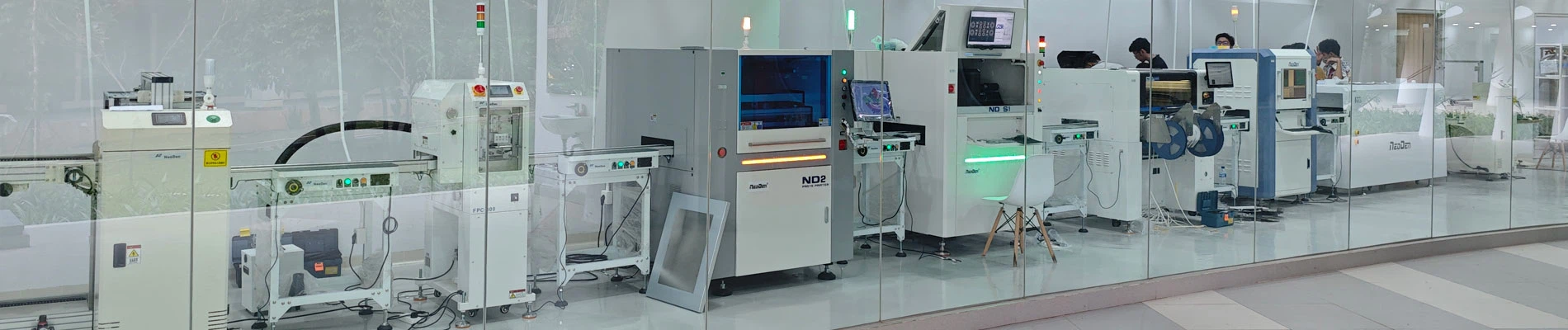
NeoDen provides a full SMT assembly line solutions, including SMT reflow oven, wave soldering machine, pick and place machine, solder paste printer, PCB loader, PCB unloader, chip mounter, SMT AOI machine, SMT SPI machine, SMT X-Ray machine, SMT assembly line equipment, PCB production Equipment SMT spare parts, etc any kind SMT machines you may need, please contact us for more information:
Hangzhou NeoDen Technology Co., Ltd
Web: www.neodentech.com
Email: info@neodentech.com