
Touch IC
Introduction
Multi-touch technology
The following four types of multi-touch technology are more mature:
1. "LLP (laser light plane) technology" mainly uses infrared laser equipment to project infrared rays onto the screen. When the screen is blocked, infrared rays are reflected, and the camera under the screen captures the reflection. After a systematic analysis, you can respond.
2. "FTIR (Frustrated Total Internal Reflection) technology" will add LED light to the interlayer of the screen. When the user presses the screen, the light of the interlayer will cause different reflection effects. The point of force, thereby reacting.
3. "ToughtLight Technology" uses the projection method to project infrared rays onto the screen.
4. "Optical Touch technology", which is equipped with a lens at the two ends of the top of the screen to receive the user's gesture changes and the position of the touchpoint. After calculation, it is converted into coordinates and then react.
IC related
Integrated circuits use semiconductor manufacturing technology to produce many transistors, resistors, capacitors, and other components on a small single crystal silicon wafer, and combine the components into a complete electronic according to the method of multilayer wiring or tunnel Wiring Circuit. It is represented by the letter "IC" (also has the text symbol "N" etc.) in the circuit. IC is a general term for semiconductor component products. Broadly speaking, it also involves all electronic components, such as resistors, capacitors, circuit boards / PCB boards, and many related products.
Advantage
Technical index of touch IC
Touch ICs generally support a wide operating voltage range, internally integrated high-resolution touch detection modules and dedicated signal processing circuits to ensure that the IC has a sensitive automatic identification and tracking function for environmental changes, and built-in special algorithms to meet the needs of waterproof and anti-interference. . At present, the most advanced touch chips in China include, for example, XC2862 series ICs, etc., they can satisfy users in complex applications such as stability, sensitivity, power consumption, response speed, waterproof, water-operated, anti-vibration, anti-electromagnetic interference High experience requirements, and with a combination of proximity detection, multi-level sensitivity adjustment and other functions.
The performance indicators of commonly used touch chips are:
-Working voltage: 2.5V ~ 5.5V
-High sensitivity touch detection channel, CMOS level output
-No need to burn parameters
-Multi-level sensitivity adjustable
-quick response
-Strong resistance to electromagnetic interference
-Waterproof and water-operating function
-Proximity detection function
-Unique environment tracking and adaptive capabilities
-Low power consumption (typical operating current <25uA)
-Built-in power-on reset (POR) and power protection circuit
-Can enter sleep control
Industry-standard
The definition of product grade is mainly based on the outer packaging of the product, and the grade is arranged in alphabetical order from A to E:
A1 level: original factory production, original packaging, anti-static packaging complete (Note: from regular channels or independent distributors, within the prescribed warranty period, the product reliability is the highest. That is, "new original goods")
A2 level: original production, original packaging, anti-static packaging is incomplete, has been opened (Note: from regular channels or independent distributors, within the prescribed warranty period. That is "new goods")
A3 level: original production (Description: The factory backlog or surplus materials, the batch number is unified. It is possible that the production date is earlier. That is, "factory surplus")
Note: A1, A2, A3 grades are collectively referred to as "new goods" in the market
B1 level: Non-original packaging or no packaging, unused, maybe repackaged by the seller (Note: produced by the original factory, but there is no packaging for some reason, the product batch number is unified, and the original factory is marked uniformly. Pass special If the channel flows into the market, the reliability of product quality is uncertain)
Level B2: Not original or unpackaged, unused, and may be repackaged by the seller (Note: Produced by the original manufacturer, but for some reason the product is not printed on the surface, product quality reliability is uncertain. Generally this (Type products will be re-marked by dealers uniformly)
B3 level: Non-original packaging or no packaging, unused, maybe repackaged by the seller (Note: It is produced by the original factory, but for some reason, there is no packaging, the product batch number is not uniform, and the original factory is marked uniformly. If special channels flow into the market, the reliability of product quality is uncertain. This type of product will be re-marked by distributors.)
B4 level: unused, with packaging (Note: produced by the original factory, but the product storage environment is not suitable, or the product is stored for too long. The product pins are oxidized. The product quality is uncertain)
Note: B1, B2, B3 and B4 are collectively referred to as "bulk new goods" in the market
C1 level: non-original production, brand new unused, complete packaging (Note: some products manufactured by the mainland, Taiwan or other overseas countries or regions are completely packaged and packaged according to the specifications of the original brand factory, and the functions are completely the same. It is printed with the original brand manufacturer. The product quality is uncertain. It is not as reliable as the original authentic product. That is, "imitation products")
C2 level: brand new unused (Note: from products with the same or similar functions, the original logo is removed and replaced with another product logo. That is, "replacement is changed", the market is collectively called "replacement")
D1 level: No packaging, used, no damage to product pins, it is used goods. Maybe repackaged by the seller (Note: Unplug directly from the old circuit board, such as some DIP, PLCC, BGA packages can be unplugged directly. That is "old goods")
D2: No packaging, it is used goods. Maybe repackaged by the seller (Note: directly removed from the old circuit board, the pin is shortened. Such products may be post-processed, and the already shortened pin is elongated or connected. That is "Old film cuts")
D3: No packaging, it is used goods. Maybe repackaged by the vendor (Note: Disassembled from the old circuit board, the pins are covered with solder. And the pins are reprocessed. That is, "old pieces")
D4 level: [Same as (D3 level)]
D5: No packaging, it is used goods. Maybe repackaged by the seller (Note: used goods, but it is a programmable device, and the built-in program cannot be erased)
Note: D1, D2, D3, and D5 are collectively referred to as "used goods" in the market
Level E1: No packaged goods. May be repackaged by the seller (Note: produced by the original factory, the product quality has not passed the quality inspection. What should have been destroyed, but circulated to the market through special channels. The quality is unreliable. That is, "other goods" "Defective")
Level E2: No packaged goods. May be repackaged by the seller (Note: Some products are changed from industrial grade to military-grade. The quality is very unstable and the security risks are great. That is, "change the grade", the market collectively refers to "fake")
Level E3: No packaged goods. May be repackaged by the seller (Description: Use completely unrelated products to type products that are required by customers. Some have the same appearance and some have different appearances. That is, "counterfeit", the market collectively refers to "fake")
T1 level: complete packaging (description: a product customized by the original factory for a specific user. It may be that only the user's product can be used)
T2 level: complete packaging (Note: The third-party uses the original chip wafer for packaging. The product quality is generally reliable. Generally, the chip is discontinued)
Note: T1 and T2 are collectively referred to as "special products" in the market
Article and pictures from the internet, if any infringement pls firstly contact us to delete.
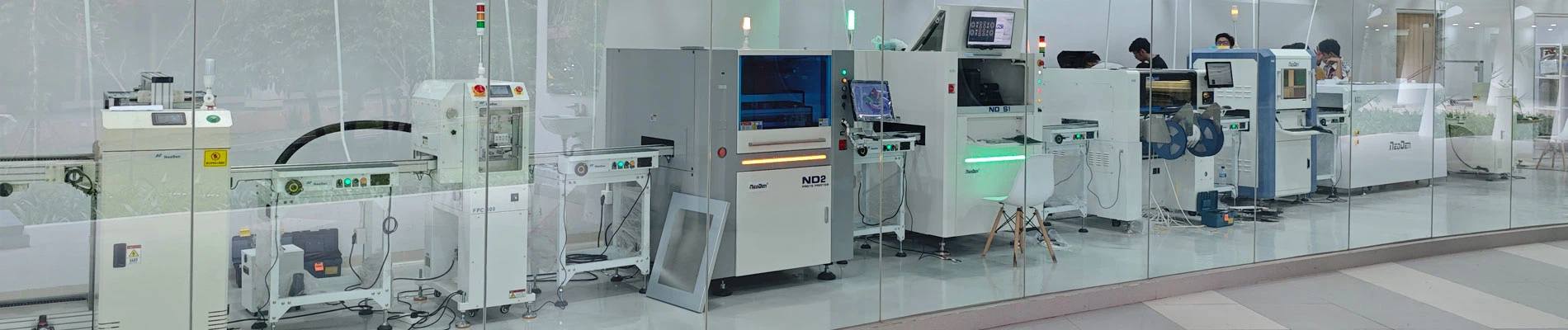
NeoDen provides a full SMT assembly line solutions, including SMT reflow oven, wave soldering machine, pick and place machine, solder paste printer, PCB loader, PCB unloader, chip mounter, SMT AOI machine, SMT SPI machine, SMT X-Ray machine, SMT assembly line equipment, PCB production Equipment SMT spare parts, etc any kind SMT machines you may need, please contact us for more information:
Hangzhou NeoDen Technology Co., Ltd
Web: www.neodentech.com
Email: info@neodentech.com