

Introduction
Within the international collaboration framework of the PCBA manufacturing industry, the BCP (Business Continuity Plan) has gradually evolved from a "bonus" to a "prerequisite." Particularly in projects involving automotive electronics, industrial control, medical devices, and telecommunications, multinational customers often explicitly require PCBA manufacturers to provide a complete set of BCP documentation during the supplier audit phase. Many factories initially view this as a purely administrative requirement, but in actual mass production systems, a BCP directly impacts delivery stability and the ability to manage supply chain risks. For multinational PCBA manufacturing partnerships, a BCP is not merely a set of policy documents-it is proof of manufacturing resilience.
Multinational Supply Chains Are Essentially "Low-Tolerance Systems"
Multinational PCBA manufacturing orders typically have three characteristics: long lead times, stable batch sizes, and complex supply chains. Once mass production begins, customers have often already distributed their entire finished product production chain across multiple countries or regions. Under this structure, a disruption at any single PCBA supply node will affect the rhythm of the entire supply chain. For example, equipment downtime, raw material shortages, logistics disruptions, or sudden policy changes can all cause delivery delays. The reason multinational customers emphasize BCP is that they need to confirm that, even under exceptional circumstances, the PCBA manufacturing supply can still maintain its basic output capacity.
The Core of BCP Is Not "Emergency Response," but "Continuity of Supply"
Many companies view BCP merely as "emergency response plans for after a problem occurs." However, within a multinational PCBA manufacturing system, the core of BCP is ensuring uninterrupted production or rapid recovery. Examples include mechanisms for switching to backup production lines, redundant configurations for critical equipment, alternative sourcing paths for materials, and cross-training systems for key positions. The purpose of these measures is not to handle incidents, but to reduce the "probability of production stoppages." For multinational clients, the primary concern is whether PCBA manufacturing can restore shipping capacity within the specified timeframe when the main production line becomes unavailable.
The Pandemic and Geopolitical Risks Have Changed Clients' Evaluation Logic
In the past, the PCBA manufacturing supply chain focused primarily on cost and lead time, but the global supply chain environment has undergone significant changes in recent years. Production shutdowns during the pandemic, international logistics delays, and regional policy adjustments have prompted customers to reassess supply risks. Particularly in multinational projects, a production disruption in one region can affect multiple assembly plants worldwide. Consequently, customers no longer evaluate only a factory's "normal capacity" but focus on assessing "whether it can maintain supply under abnormal conditions." It is against this backdrop that BCP systems have become a key audit focus.
The risk points in PCBA manufacturing are far more numerous than they appear at first glance.
From a manufacturing perspective, PCBA production involves multiple stages that are highly dependent on coordination. These include PCB supply, component procurement, SMT placement, reflow oven soldering, testing, and logistics and shipping. A disruption in any one of these stages will directly impact delivery. For example, a shortage of a critical IC, equipment failure on an SMT production line, or a delay in the delivery of a batch of PCBs could all cause an entire order to stall. The role of a Business Continuity Plan (BCP) is to identify and structure these risk points in advance and establish alternative pathways. What multinational clients care about is not "whether problems will arise," but "whether they can be controlled once they do."
BCP is also part of supply chain transparency
In international PCBA manufacturing collaborations, transparency has become a fundamental requirement. Customers not only want to see production capacity but also need to understand the factory's response protocols in the event of abnormalities. Examples include a list of backup suppliers, alternative material certification processes, cross-factory capacity allocation mechanisms, and inventory safety strategies. This information forms the core of the BCP system. For multinational clients, BCP is not only a risk management tool but also a mechanism for building trust in the supply chain. PCBA factories that can provide a clear BCP plan often find it easier to secure long-term partnership opportunities during the audit phase.
Factories with BCP Capabilities Are More Likely to Enter High-End Supply Chains
In the automotive electronics and industrial control sectors, supply chain stability is even more important than unit price. When selecting PCBA manufacturing suppliers, many multinational clients prioritize factories with BCP systems. This is because such factories typically have more comprehensive production management systems, including equipment redundancy, material management, quality control, and staff training programs. These capabilities collectively constitute "sustainable delivery capability." From the customer's perspective, this capability holds greater value than short-term price advantages.
BCP Is Evolving from an "Audit Requirement" to a "Competitive Threshold"
As the global electronics manufacturing industry continues to consolidate, BCP is no longer merely an additional requirement for large customers. An increasing number of mid-to-high-end PCBA manufacturing orders explicitly request BCP-related documentation as early as the quotation stage. In the future, the core of supply chain competition will not be limited to production capacity and cost, but will center on "risk resilience." Only factories capable of consistent and stable delivery will have the opportunity to enter the long-term supply systems of multinational clients. In the PCBA manufacturing industry, the significance of BCP has transcended that of a traditional management document; it represents a factory's systemic capability to navigate uncertain environments. For multinational clients, what they are purchasing is not merely production capacity, but stability and sustainable delivery capability.
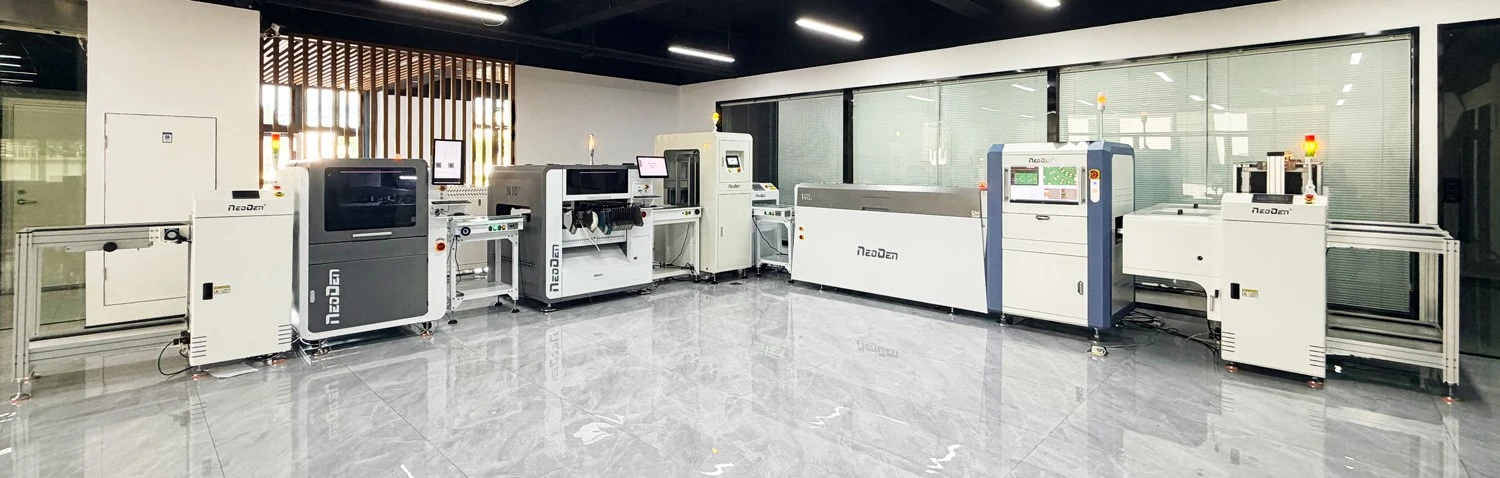
Quick facts about NeoDen
- Established in 2010 with 200+ employees & 27,000+ Sq.m. factory of independent property rights, to ensure the standard management and achieve the most economic effects as well as saving the cost.
- Owned the own machining center, skilled assembler, tester and QC engineers, to ensure the strong abilities for NeoDen machines manufacturing, quality and delivery.
- 40+ global partners covered in Asia, Europe, America, Oceania and Africa, to successfully serve 10000+ users in all of the world, to ensure the better and faster local service and prompt response.
- 3 different R&D teams with total 25+ professional R&D engineers, to ensure the better and more advanced developments and new innovation.
- Skilled and professional english support&service engineers, to ensure the prompt response within 8 hours, solution provides within 24 hours.
- The unique one among all of the Chinese manufacturers who registered and approved CE by TUV NORD.
- NeoDen supplies life-long technical support and service for all of the NeoDen machines, moreover, regular software updates based on the using experiences and actual daily request from the endusers.