
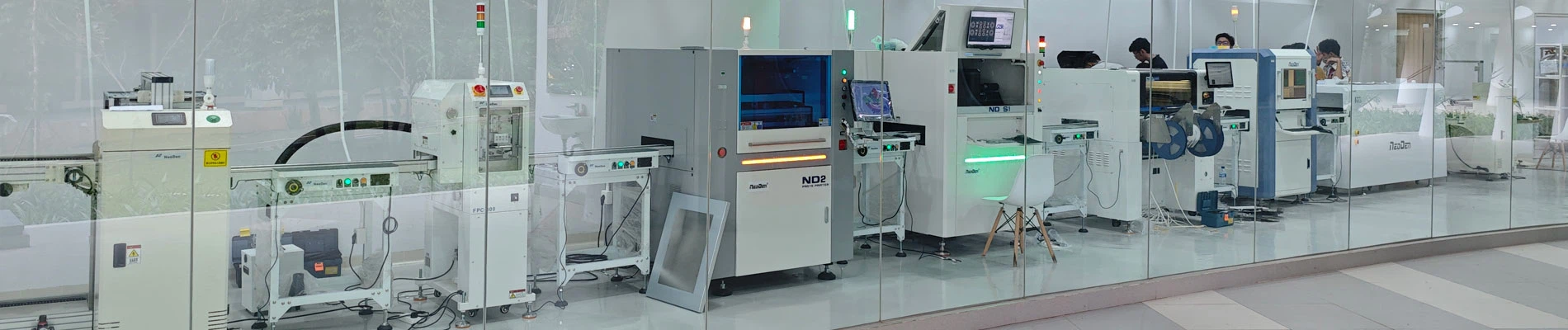
The pick and place machine we use is mainly composed of mechanical mechanism, optical system, electronic circuit, computer, operating system software, machine control software and system management software, among which the visual system is an integral part of the optical system. At present, the vision system of SMT mounter has become an important part of high precision SMT mounter. So what is the function of SMT machine vision system?
SMT machine vision system is a computer based image observation, recognition and analysis system, mainly by the vision of hardware and software. The hardware is generally composed of image detection, image storage and processing, image display and so on. Using A sensor sensor, the camera senses the light intensity distribution of an object in A given view, converts it into an analog electrical signal, and then through A/D conversion digitizes it into discrete values that represent A given average light intensity in the field of view. The resulting digital image is covered by a regular spatial grid, each of which is called a pixel.
In SMT machine vision system, gray method using multistage height to the size of the said resolution of images. The discrete value specified by the grayscale resolution is the measured light intensity given by the SMT mount machine. The lower the intensity of light to be processed, the higher the gray resolution. Therefore, high speed SMT machine generally adopts visual centering system. The vision centering system adopts digital image processing technology. When the nozzle on the SMT mount machine's mount head picks up the component, it is secured by a process of moving to the mount position. The image is collected by the camera on the chip head or fixed in a certain position of the fuselage. The optical density distribution of the image detection element is transmitted in digital form through the CCD optocoupler array composed of many small and precise photosensitive elements on the camera. Output grayscale values between 0 and 255. If the gray value is proportional to the optical density, the larger the gray value, the sharper the digital image. The digital information is stored, encoded, amplified, sorted and analyzed, and the results are fed back to the control unit. The processing results are output to the servo system, and the position deviation absorbed by compensating components is adjusted, and the patch operation is finally completed.