
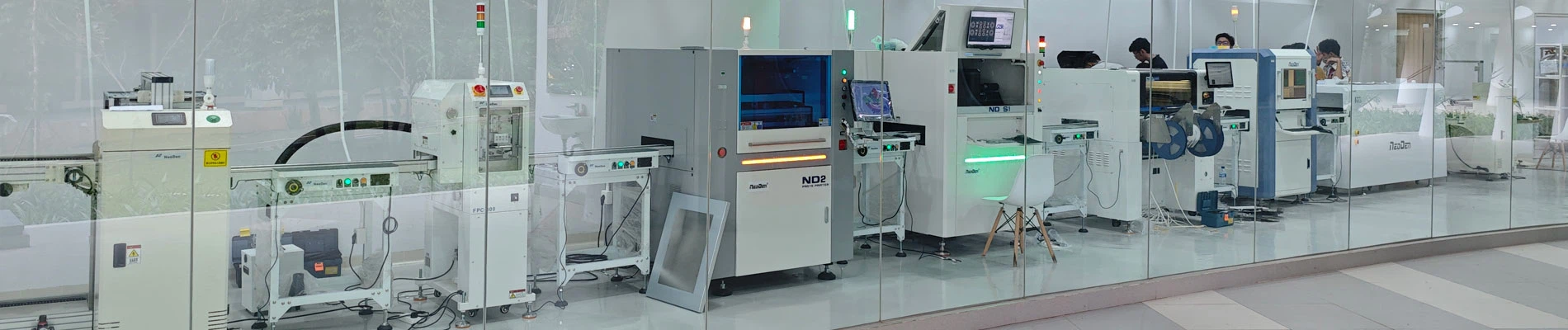
SMT (Surface Mount Technology) and BGA (Ball Grid Array) are two key process technologies in modern PCBA processing. These technologies not only improve the functional density and reliability of circuit boards, but are also widely used in different types of electronic products. In this paper, we will discuss the application of SMT and BGA processes in PCBA processing, and clarify their advantages and selection criteria.
I. SMT Overview
SMT (Surface Mount Technology) is a technology that mounts electronic components directly on the surface of a circuit board.
1. Increased component density: SMT allows smaller components to be mounted on the circuit board, thus increasing the component density of the board. This is especially important for modern electronics such as smartphones, tablets and other portable devices.
2. Improved electrical performance: Since SMT components have shorter pins, the electrical paths are shorter, which helps to improve the speed and stability of signal transmission.
3. Reduced production costs: The SMT process typically requires less human intervention and can be assembled using automated SMT equipment, which reduces production costs.
4. Improved reliability: SMT components have better resistance to vibration and shock, which improves the overall reliability and durability of the product.
In PCBA processing, SMT technology is widely used in the production of various electronic products, including consumer electronics, communications equipment and automotive electronics.
II. BGA (Ball Grid Array) Overview
BGA is a packaging technology in which IC (Integrated Circuit) chips are connected to the circuit board through the solder balls at the bottom. This technology has the following characteristics.
1. Improved electrical performance: BGA packages offer better electrical performance than conventional packages, especially in high frequency applications. Signal transmission is more stable due to the shorter electrical path provided by the layout of the solder balls.
2. Optimized Thermal Management: The BGA package design effectively disperses the heat generated by the IC chip and improves thermal management performance. This is especially important for high power applications and high performance processors.
3. Improve assembly density: The solder ball arrangement of the BGA package allows for higher pin density, which is suitable for highly integrated applications. It enables efficient utilization of board space and improves board density and overall performance.
4. Enhanced soldering reliability: The uniform distribution of solder joints in BGA reduces the risk of soldering defects, such as false soldering and short circuits, thus enhancing product reliability.
In PCBA processing, BGA technology is widely used in processors, memory and other highly integrated chip packages, especially in electronic devices that require high performance and high density.
III. SMT and BGA process selection criteria
In the selection of SMT and BGA process, consider the following criteria can help ensure the best processing results.
1. Design Requirements: Select the appropriate process based on the functional needs and design requirements of the product. For example, for highly integrated and high performance applications, BGA may be more suitable, while for applications requiring high density components, SMT may be more appropriate.
2. Production cost: The SMT process typically has a lower production cost, while BGA packages may involve higher manufacturing and testing costs. Trade-offs need to be made based on budget.
3. Product Reliability: Consider the environment in which the product will be used and the reliability requirements. If the product needs to withstand high mechanical stress or harsh environments, BGA may offer better performance.
4. Technical capability: Ensure that the PCBA processor you choose has the relevant technical capabilities and equipment to support the effective implementation of the SMT and BGA processes. Technical capabilities include automated placement machines, soldering equipment and test facilities.
IV. Application examples
1. Smartphones: In smartphones, SMT technology is used to mount a variety of small components such as resistors, capacitors and integrated circuits, while BGA technology is used for the packaging of processors and memories, enhancing the performance and reliability of the device.
2. Computer motherboards: In computer motherboards, SMT technology is used for the assembly of various peripheral components, while BGA technology is used for the packaging of processors and chipsets, ensuring that high-performance computing needs are met.
3. Automotive electronics: In automotive electronics, the combined application of SMT and BGA technologies can meet the requirements of high density and high reliability, ensuring the stable operation of automotive electronic systems under various operating conditions.

Quick facts about NeoDen
1. Established in 2010, 200+ employees, 8000+ Sq.m. factory.
2. NeoDen products: Smart series PNP machine, NeoDen K1830, NeoDen4, NeoDen3V, NeoDen7, NeoDen6, TM220A, TM240A, TM245P, reflow oven IN6, IN12, Solder paste printer FP2636, PM3040.
3. Successful 10000+ customers across the globe.
4. 30+ Global Agents covered in Asia, Europe, America, Oceania and Africa.
5. R&D Center: 3 R&D departments with 25+ professional R&D engineers.
6. Listed with CE and got 50+ patents.
7. 30+ quality control and technical support engineers, 15+ senior international sales, timely customer responding within 8 hours, professional solutions providing within 24 hours.