
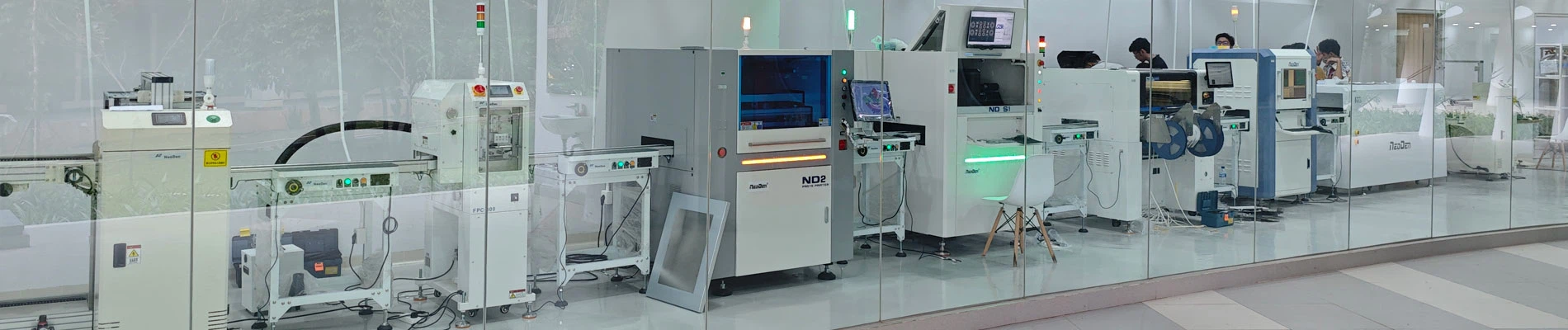
Since the 1980s, surface-mount technology has been the industry standard for assembling printed circuit boards. It has maintained its popularity due its wide array of advantages and relatively few drawbacks. For over 35 years, Telan Corporation has been offering surface-mount technology as part of our Virginia PCB assembly services.

The Advantages of Surface-Mount Technology
1. Surface-mount technology (SMT) permits the creation of smaller PCB designs by allowing components to be placed closer together on the board. This means devices can be designed to be more lightweight and compact.
2. The SMT process is faster to set up for production than its counterpart, through-hole technology, because it does not require the circuit board to be drilled for assembly. This also means it has lower initial costs.
3. Components are attached via selective soldering using a solder that doubles as a glue. The selective solder process can also be customized for each component.
4. SMT provides stability and better mechanical performance under vibration and shaking conditions.
5. Printed circuit boards created with the SMT process are more compact, providing higher circuit speeds. (This is one of the main reasons most manufacturers opt for this method.)
6. Its combination of high-end components allow for multitasking.
7. Components can be placed on both sides of the circuit board and in higher density - more components per unit area and more connections per component.
8. The surface tension of the molten solder pulls components into alignment with solder pads, automatically correcting small errors in component placement.
9. It assures lower resistance and induction at the connection, reducing the unwanted effects of RF signals and providing better and more predictable high-frequency performance.
10. SMT parts are often less costly than comparable through-hole parts.
11. Due to its compact package and lower lead induction, it has a smaller radiation loop area and thereby a better EMC compatibility (lower radiated emissions).