
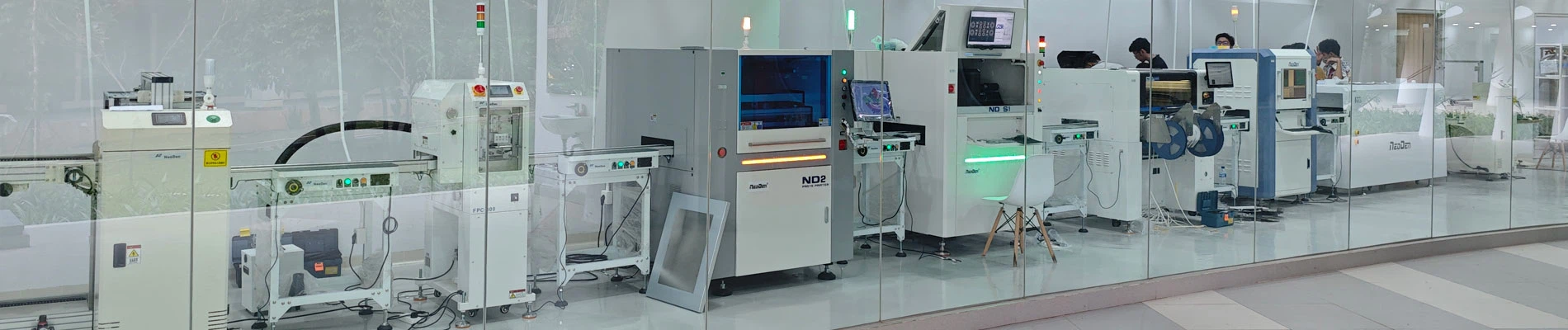
The PCBA process is very complex, basically going through nearly 50 processes, from circuit board manufacturing process, component procurement and inspection, SMT assembly, DIP plug-in, PCBA testing, program firing, packaging and other important processes. Among them, the circuit board manufacturing process has 20-30 procedures, and the procedures are extremely complicated.
The following figure shows the PCBA processing process in detail, allowing you to quickly acquire relevant professional knowledge.

Circuit board processing technology and equipment
Circuit board equipment includes electroplating line, sinking copper wire, DES line, SES line, washing machine, OSP line, sinking nickel gold line, press, exposure machine, oven, AOI, plate warping leveling machine, edge grinding machine, cutting material Machine, vacuum packaging machine, gong machine, drilling machine, air compressor, spray tin machine, CMI series, light plotter, etc.
Road boards can be divided into single-sided, double-sided and multilayer printed boards according to the number of layers of conductor patterns. The basic manufacturing process of a single panel is as follows:
Foil-clad board-->Unloading-->Baking board (to prevent deformation)-->Mould making-->washing and drying-->Film (or screen printing) —>Exposure and development (or anti-corrosion ink)- ->Etching-->Film removal--->Electrical continuity inspection-->Cleaning treatment-->Screen printing solder mask pattern (printing green oil)-->Curing-->Screen printing marking symbols-->Curing- ->Drilling-->Shape Processing-->Cleaning and Drying-->Inspection-->Packing-->Finished Product

The basic manufacturing process of double panel is as follows:
Graphic plating process
Foil Clad Laminate-->Cutting-->Drilling Benchmark Holes-->CNC Drilling-->Inspection-->Deburring-->Electroless Plating Thin Copper-->Electroplating Thin Copper-->Inspecting--> Brushing-->Filming (or screen printing)-->Exposure and developing (or curing)-->Inspection and repairing-->Graphic plating (Cn ten Sn/Pb)-->Removing film-->Etching- ->Inspect and repair the board-->Plugs nickel-plated and gold-plated-->Hot melt cleaning-->Electrical continuity detection-->Cleaning treatment-->Screen printing solder mask pattern-->Curing-->Screen printing mark symbol- ->Curing-->Shape processing-->Cleaning and drying-->Inspection-->Packing-->Finished product
Solder Mask Bare Copper Clad (SMOBC) process: The main advantage is that it solves the short-circuit phenomenon of solder bridging between thin lines. At the same time, due to the constant ratio of lead to tin, it has better solderability and storage properties than hot melt plates. The SMOBC process of pattern plating followed by lead-tin removal is similar to the pattern plating process. Changes only after etching.
Double-sided copper clad board-->According to the pattern electroplating process to the etching process-->Pb-Sn removal-->Inspection-->Cleaning--->Solder mask pattern-->Plug nickel plating and gold plating--> Adhesive tape for plugs-->Hot air leveling-->Cleaning--->Screen printing marking symbols--->Shape processing--->Cleaning and drying--->finished product inspection-->Packaging-->finished product.
SMT chip processing technology

1. According to the customer Gerber file and BOM list, make SMT production process files and generate SMT coordinate files
2. Check whether all production materials are ready, make a complete set of orders, and confirm the PMC plan for production
3. Carry out SMT programming and make the first board for verification to ensure that it is correct
4. According to SMT process, make laser steel mesh
5. Perform solder paste printing to ensure that the solder paste after printing is uniform, good thickness, and consistent
6. Place the components on the circuit board through the SMT placement machine, and perform online AOI automatic optical inspection if necessary
7. Place the components on the circuit board through the SMT placement machine, and perform online AOI automatic optical inspection if necessary
8. After the necessary IPQC inspection
9. The DIP plug-in process passes the plug-in material through the circuit board and then flows through wave soldering for soldering
10. Necessary post-furnace processes, such as cutting feet, post welding, board surface cleaning, etc.
11. QA conducts a comprehensive inspection to ensure the quality is OK