
Introduction
Within the landscape of electronics manufacturing, PCBA processing forms the foundation for building all modern electronic devices. From smartphone motherboards to aerospace control systems, the performance and reliability of each PCBA directly determines the success or failure of the final product. As electronics evolve toward smaller, more complex, and higher-performance designs, traditional testing and optimization methods are reaching their limits. At this critical juncture, a seemingly distant frontier technology-quantum computing-is quietly revealing its immense potential to revolutionize PCBA manufacturing.
The Computational "Nuclear Bomb" for Solving Complex Problems
To grasp quantum computing's impact on PCBA manufacturing, we must first understand its fundamental difference from traditional computers. Today's computers rely on "bits" to store and process information, where each bit can only be either 0 or 1. Quantum computers, however, utilize "qubits," which can exist in a superposition state of both 0 and 1 simultaneously and become interconnected through "quantum entanglement." This unique physical property grants quantum computers exponential acceleration capabilities beyond all classical computers when tackling specific types of complex problems.
For PCBA manufacturing, every stage-from circuit design to production scheduling to fault diagnosis-involves numerous variables and possibilities, essentially presenting complex combinatorial optimization problems. This is precisely quantum computing's domain.
How Does Quantum Computing Empower PCBA Manufacturing?
Revolutionary Circuit Design Optimization
PCBA design extends beyond schematic drafting to finding optimal solutions for component placement, routing, and connections to prevent signal interference and uneven heat dissipation. As component counts grow exponentially, the design space becomes virtually infinite. Traditional EDA (Electronic Design Automation) software, even with the most powerful algorithms, can only find a "good enough" approximate solution.
Quantum annealing or quantum optimization algorithms enable engineers to process astronomical combinations, uncovering truly optimal designs. This not only enhances PCBA performance but also significantly reduces power consumption and heat generation, opening new possibilities for miniaturized device design.
Leap in Simulation and Modeling Accuracy
Physical phenomena within electronic components-such as electron movement in semiconductor materials-are fundamentally quantum mechanical behaviors. Traditional computers require enormous computational resources to accurately simulate these behaviors, yet their precision remains limited.
Imagine using a quantum computer to directly simulate the electromagnetic field distribution of a PCBA under high-frequency signals or predict material stress under extreme temperatures. This would elevate the accuracy of virtual testing to unprecedented levels. Potential design flaws could be identified and resolved before physical manufacturing, drastically shortening R&D cycles and reducing rework costs.
Intelligent Fault Diagnosis and Predictive Maintenance
PCBA manufacturing testing generates vast amounts of data. Analyzing this data to identify failure patterns poses a formidable challenge for traditional algorithms, especially when failures stem from multiple minute, nonlinear factors.
Future quantum algorithms will process and correlate this data at unimaginable speeds, identifying microscopic defect patterns invisible to the human eye or conventional software. This powerful analytical capability will enhance diagnostic precision and even enable predictive maintenance by forecasting potential future failures in specific PCBA units based on production data.
Challenges and Future Outlook
Of course, quantum computing's disruption of PCBA manufacturing won't happen overnight. Currently, quantum computer hardware remains in its early developmental stages, plagued by issues such as poor stability and limited qubit counts. Simultaneously, specialized quantum algorithms and application software tailored for the electronics manufacturing sector still need to be developed.
Nevertheless, this door has been opened. In the near future, the PCBA processing industry may be among the first to leverage cloud-based quantum computing services to tackle the most challenging optimization problems-such as routing for ultra-high-density boards and thermal solutions for complex multilayer boards. Ultimately, quantum computing will transcend its role as a mere testing or design tool, becoming a core driving force propelling the entire electronics manufacturing industry toward greater efficiency, precision, and intelligence.
Quick facts about NeoDen
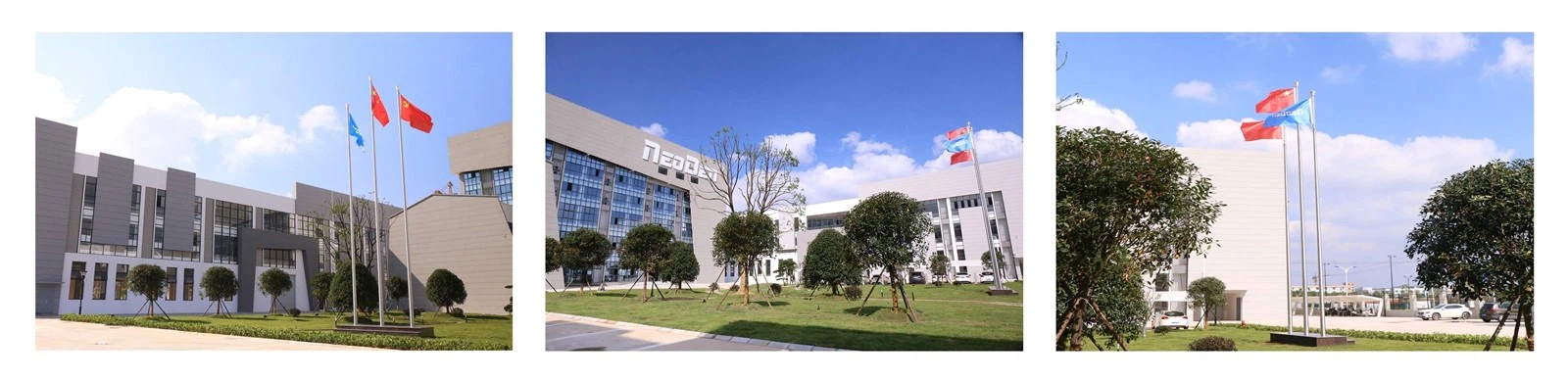
1) Established in 2010, 200 + employees, 27000+ Sq.m. factory.
2) NeoDen Products:Different Series PnP machines, NeoDen YY1, NeoDen4, NeoDen5, NeoDen K1830, NeoDen9, NeoDen N10P. Reflow Oven IN Series, as well as complete SMT Line includes all necessary SMT equipment.
3) Successful 10000+ customers across the globe.
4) 40+ Global Agents covered in Asia, Europe, America, Oceania and Africa.
5) R&D Center: 3 R&D departments with 25+ professional R&D engineers.
6) Listed with CE and got 70+ patents.
7) 30+ quality control and technical support engineers, 15+ senior international sales, for timely customer responding within 8 hours, and professional solutions providing within 24 hours.