
Introduction
In consumer electronics, communications, and medical fields, products are continuously evolving toward smaller, thinner, and more powerful designs. This trend has directly led to unprecedented complexity in PCBA design. High-density interconnect (HDI), any-layer interconnect, miniaturized components (e.g., 01005, 008004), and complex BGA packaging have become standard. Conventional testing methods struggle to handle these highly complex PCBA assemblies. Fortunately, a series of emerging testing technologies are emerging, offering new solutions for quality control in PCBA manufacturing.
I. Limitations of Traditional Testing
Traditional PCBA testing primarily relies on ICT and FCT. ICT uses physical probes to contact test points on the board, detecting open circuits, short circuits, and electrical parameters of components. However, as circuit density increases, space for dedicated test points on PCBs becomes increasingly limited or even non-existent. While FCT verifies PCBA functionality, it can only determine whether a board is "pass" or "fail," failing to pinpoint specific defects and requiring extended testing time. Both methods struggle to effectively address the challenges posed by high-density, high-complexity PCBA manufacturing.
II. Emerging Testing Technologies: Solutions for Greater Complexity
To ensure the quality of high-density PCBA, the industry is widely adopting the following emerging testing technologies:
1. 3D-SPI and 3D-AOI
In the PCBA manufacturing process, solder paste printer printing is the first critical step determining solder joint quality. 3D-SPI (3D Solder Paste Inspection) utilizes laser or fringe light scanning to precisely measure the height, volume, and area of solder paste on each pad. This provides a more comprehensive assessment than traditional 2D inspection, effectively preventing issues like cold solder joints and bridging during reflow soldering.
Following this, 3D-AOI (3D Automated Optical Inspection) performs a comprehensive 3D scan of the assembled PCBA. It not only verifies component placement accuracy and detects omissions but also identifies floating pins. Furthermore, it reconstructs solder joint shapes through 3D imaging, enabling more precise quality assessment.
2. AXI: Non-Destructive Penetration Inspection
For components like BGAs and LGAs with hidden solder joints beneath the package, traditional AOI falls short. AXI (Automated X-ray Inspection) technology perfectly addresses this challenge. Leveraging X-ray penetration, it scans the interior of PCBA boards to generate high-resolution images. Operators can clearly visualize defects like voids within solder joints, ball shape irregularities, and solder bridging. As a non-destructive method, AXI is particularly suited for PCBA manufacturing with stringent reliability requirements, such as in military, medical, and automotive electronics.
3. Flying Probe Test: Flexible and Cost-Effective
Flying Probe Test (FPT) eliminates the need for expensive test fixtures. Its test probes, controlled by robotic arms, can flexibly access any location on the PCBA for testing. This makes it particularly suitable for small-batch, high-variety PCBA production needs, as well as high-density circuit boards without pre-reserved test points. Although FPT is relatively slower, its flexibility and lower cost make it an effective complement for testing highly complex PCBA.
Conclusion
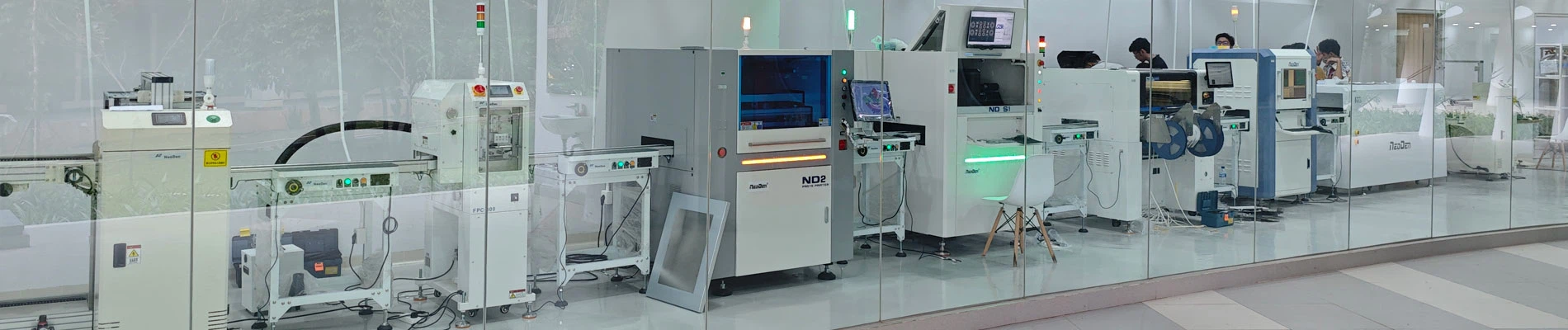
Faced with increasingly complex designs, a single testing technology can no longer meet demands. Future PCBA manufacturing testing strategies will integrate multiple technologies. For example, on the production line, 3D-SPI can first ensure solder paste quality, followed by 3D-AOI to inspect placement, and finally AXI to comprehensively scan critical BGA components.
With the integration of artificial intelligence and machine learning technologies, these inspection systems will become increasingly intelligent. They will learn from massive datasets to automatically identify more complex defects and even predict potential production line issues based on inspection data. These emerging testing technologies not only enhance testing accuracy and efficiency but also serve as the cornerstone for ensuring the stable reliability of highly complex PCBA products in demanding environments, paving new development paths for the entire PCBA manufacturing industry.

Quick facts about NeoDen
1) Established in 2010, 200 + employees, 27000+ Sq.m. factory.
2) NeoDen Products:Different Series SMT machines, NeoDen YY1, NeoDen4, NeoDen5, NeoDen K1830, NeoDen9, NeoDen N10P. Reflow Oven IN Series, as well as complete SMT Line includes all necessary SMT equipment.
3) Successful 10000+ customers across the globe.
4) 40+ Global Agents covered in Asia, Europe, America, Oceania and Africa.
5) R&D Center: 3 R&D departments with 25+ professional R&D engineers.
6) Listed with CE and got 70+ patents.
7) 30+ quality control and technical support engineers, 15+ senior international sales, for timely customer responding within 8 hours, and professional solutions providing within 24 hours.