
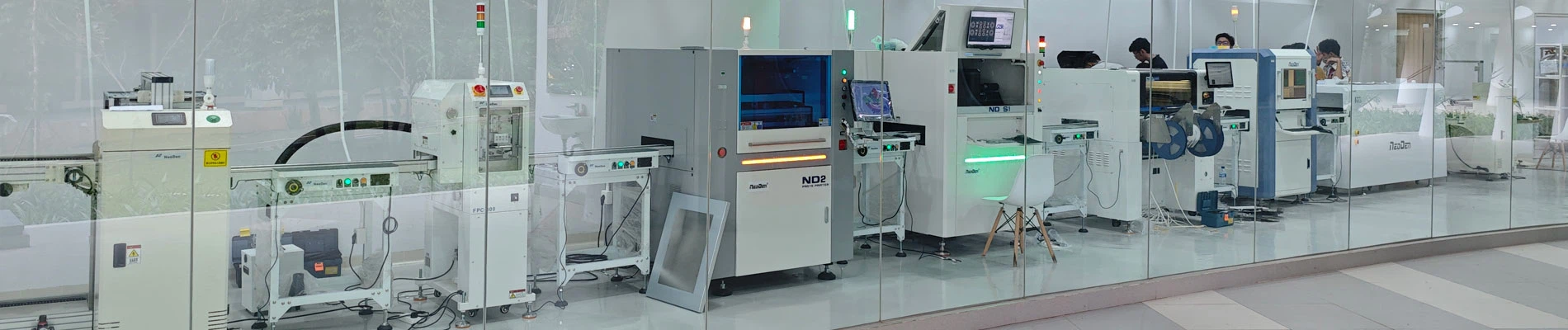
Environmental conditions and temperature and humidity control are very important in the PCBA (Printed Circuit Board Assembly) manufacturing process because they can affect the performance and stability of electronic components. The following are key considerations for environmental conditions and temperature and humidity control in PCBA manufacturing:
1. Temperature control
Temperature is one of the key factors in PCBA manufacturing because temperature variations can affect the quality of the soldering process. Typically, manufacturers operate within a certain temperature range, which is usually between 20-25 degrees Celsius degrees.
For soldering processes, especially surface mount technology (SMT) and wave soldering machine soldering, the temperatures in the preheating zone, the soldering zone and the cooling zone must be precisely controlled.
2. Humidity control
Humidity control is critical for preventing electrostatic discharge (ESD) and maintaining the stability of electronic components. Typically, the relative humidity (RH) of a PCBA manufacturing environment is maintained between 30% and 60% to minimize the risk of ESD.
High humidity environments may lead to moisture in electronic components, which can affect their performance. Low humidity environments may increase the risk of ESD.
3. Temperature and humidity uniformity
Temperature and humidity in the manufacturing environment should be evenly distributed throughout the manufacturing area to ensure that each PCBA is manufactured under the same conditions and to avoid variability.
The temperature and humidity control system should be able to monitor and adjust the environmental conditions in real time to accommodate changes in the manufacturing process.
4. Anti-dust and anti-static measures
The manufacturing area should be kept clean and measures should be taken to prevent dust and impurities from entering the PCBA manufacturing environment.
Static elimination measures, such as grounding and the use of anti-static equipment, are also very important to reduce the risk of ESD.
5. Temperature and humidity records
Manufacturers typically record temperature and humidity data for their environments in order to track changes in the manufacturing process and make adjustments and improvements as needed.
In conclusion, in PCBA manufacturing, strict control of environmental conditions and temperature and humidity is one of the key factors in ensuring product quality and reliability. This helps to reduce the number of defective products, improve the performance and life of PCBAs, and reduce the cost of repairs and warranties. As a result, manufacturers often invest in proper environmental control systems and train staff to maintain these conditions.

Zhejiang NeoDen Technology Co., LTD., established in 2010 with 100+ employees & 8000+ Sq.m. factory of independent property rights, to ensure the standard management and achieve the most economic effects as well as saving the cost.
Owned the own machining center, skilled assembler, tester and QC engineers, to ensure the strong abilities for NeoDen machines manufacturing, quality and delivery.
Skilled and professional english support&service engineers, to ensure the prompt response within 8 hours, solution provides within 24 hours.
The unique one among all of the Chinese manufacturers who registered and approved CE by TUV NORD.
NeoDen supplies life-long technical support and service for all of the NeoDen machines, moreover, regular software updates based on the using experiences and actual daily request from the endusers.