
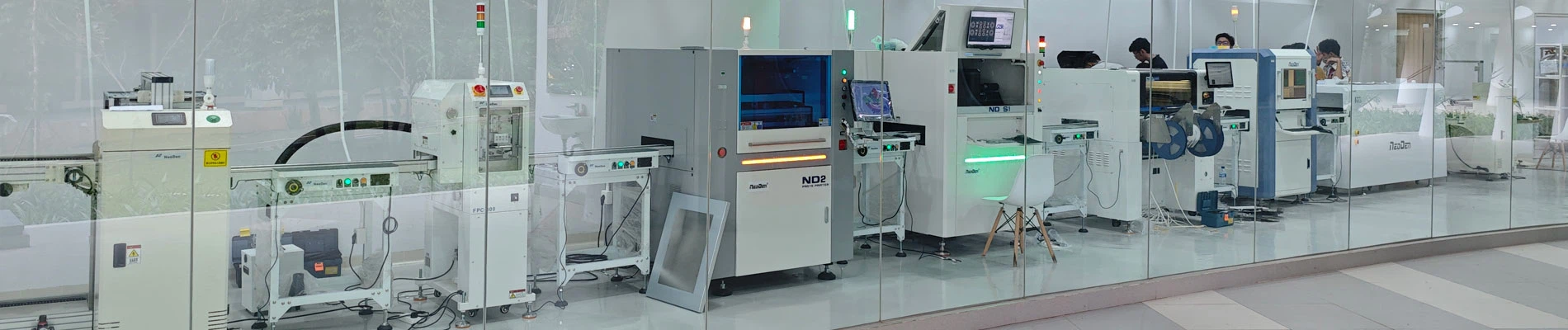
Reflow oven process is coated with solder paste, mounted components of the PCB, after reflow oven soldering to complete the drying, preheating, melting, cooling and solidification of the welding process.
I. PCB pad design
If the PCB pad design is correct, a small amount of skewed mounting can be corrected during reflow soldering due to the role of surface tension of molten solder (known as self-positioning or self-correcting effect).
II. The quality of solder paste
Solder paste is a reflow soldering process necessary materials, it is by the alloy powder (particles) and paste flux carrier evenly mixed into the paste solder. One of the alloy particles is the main component of the formation of solder joints, flux is to remove the oxidized layer of the soldering surface to improve wettability.
III. The quality and performance of components
The quality and performance of components directly affect the reflow soldering through rate. As one of the objects of reflow soldering, must have the most basic point is high temperature resistance. And some components will have a relatively large heat capacity, the welding also has a big impact, such as the usual PLCC, QFP and a discrete chip components compared to the heat capacity to be large, welding large-area components than small components more difficult.
IV. the welding process process control
1. The establishment of the temperature profile
Temperature profile provides an intuitive way to analyze a component in the entire reflow process temperature changes. This is very useful for obtaining the best weldability, to avoid damage to the components due to over-temperature, as well as to ensure the quality of welding are very useful.
2. Pre-heat section
The purpose of this area is to the room temperature PCB as soon as possible to heat up to the second specific target. The rate of heating should be controlled within the appropriate range, if too fast, will produce thermal shock, the board and components may be damaged. Too slow, the solvent evaporation is not sufficient, affecting the quality of soldering. Due to the faster heating rate, the temperature difference within the SMA in the latter part of the temperature zone is larger. In order to prevent damage to the components of thermal shock, the general provisions of the maximum rate of 4 ℃ / s. However, the usual rate of rise is set to 1-3 ℃ / s. Typical heating rate of 2 ℃ / s.
3. Insulation section
Holding section refers to the temperature from 120 ℃ -150 ℃ rise to the melting point of the solder paste area. Its main purpose is to stabilize the temperature of the components within the SMA to minimize the temperature difference. Sufficient time in this region so that the temperature of the larger components to catch up with the smaller components, and to ensure that the flux in the solder paste is fully evaporated. To the end of the insulation section, pads, solder balls and component pins on the oxide is removed, the temperature of the entire circuit board to reach equilibrium.
4. Reflow section
In this area the heater temperature is set to the highest temperature, so that the temperature of the component quickly rise to the peak temperature. In the reflow section of the peak temperature of the soldering depending on the different solder paste used, generally recommended for the melting point of the solder paste temperature plus 20-40 ℃. For the melting point of 183 ° C 63Sn / 37Pb solder paste and melting point of 179 ° C Sn62/Pb36/Ag2 solder paste, the peak temperature is generally 210-230 ° C, reflow time should not be too long, in order to prevent adverse effects on the SMA. Ideal temperature profile is more than the melting point of the solder "tip area" covers the smallest area.
5. Cooling section
In this section of the solder paste within the lead and tin powder has melted and fully wetted the surface to be connected, should be used as fast as possible to cool, which will help to get a bright solder joints and have a good shape and low contact angle. Slow cooling will result in more decomposition of the board into the tin, resulting in a gray, rough solder joint. In extreme cases, it can cause poor soldering and weaken the bond.

Features of NeoDen IN12C Reflow Oven
1. Built-in welding fume filtration system, effective filtration of harmful gases, beautiful appearance and environmental protection, more in line with the use of high-end environment.
2. The control system has the characteristics of high integration, timely response, low failure rate, easy maintenance, etc.
3. The heat insulation protection design, the shell temperature can be effectively controlled.
4. Intelligent control, high-sensitivity temperature sensor, effective temperature stabilization.
5. Intelligent, integrated with the PID control algorithm of the custom-developed intelligent control system, easy to use, powerful.
6. professional, unique 4-way board surface temperature monitoring system, so that the actual operation in a timely and comprehensive feedback data, even for complex electronic products can be effective.
7. Can store 40 working files.
8. Up to 4-way real-time display of PCB board surface welding temperature curve.