
The most frequently asked question at Electrolube is "When is it appropriate to use a tribo varnish or potting resin?" There are a variety of factors that play a large part in determining "how the board will fit into the assembly" and "what environment the circuit will operate in". For example, when the enclosure is designed to provide environmental protection, it is recommended that a tri-proof paint be used, as it will act as a second line of defense in the event that the enclosure seal fails.
When there is no separate enclosure or container to provide primary environmental protection, then potting resin may be a better choice. Obviously, there are applications where the choice of technology is obvious, for example, where the highest level of protection is required in a harsh environment. In such cases, overmolding and potting resins can provide the necessary long-term protection, provided the appropriate resin is selected for the predominant environmental conditions and is tested and approved.
Where ease of processing and speed of processing are primary considerations, triple protection paints are always preferred, especially well formulated new cured films that provide a high level of protection in any situation. Most of these coatings are one-component systems that are easy to apply and have fast curing speeds and low temperature rise. On the other hand, one-component coatings are solvent-based and their viscosity can be changed for ease of application, but this may have an environmental impact.
Three-proof paint can be applied manually using a paint brush, spray gun, or simply by dipping the PCB into a coating tank. When large volumes of circuits must be handled on fast moving production lines, selective coating can be performed by tightly controlled robots to obtain maximum consistency. The film formed by coating the tribo varnish in liquid form is cured to a thickness of between 25 and 100 μm to ensure minimal mass increase of the component. These coatings are usually transparent, allowing for rework, so the coated components are visible and easily replaceable.
The level of chemical resistance and thermal protection provided by the tri-proof varnish is usually suitable for short-term exposure.
The coating thickness of potting resins and encapsulation compounds typically starts at 0.5mm, but is usually much thicker than 0.5mm, which can result in a significant increase in component mass. On top of this, the increased thickness does mean that the PCB can be better protected against chemical attack, especially in the case of prolonged immersion. Depending on the formulation, the resin can also provide excellent physical impact protection, as its volume will help to disperse the forces applied to the PCB without concentrating them at one point. To protect the intellectual property of the design, a layer of dark resin can mask the circuit layout and components from being copied. But remember, trying to remove the resin can damage the PCB and prevent component replacement.
Compounds and resins are usually two-component systems that require mixing the resin and hardener in precise proportions to form a cross-linked polymer during curing. Under certain operating conditions, minerals (fillers) can also be added to the resin to improve its properties. As with tribo enamels, most resins cure at room temperature, while for encapsulating resins a relatively slow process is required, but the cure time can be shortened by heating.
In some applications, two-component resins may be the preferred choice for circuit protection. Two-component three-protection paints offer superior mechanical properties compared to one-component coatings. For example, Electrolube has developed the 2K series of solvent-free coating materials, one based on a two-component chemical composition similar to that of the resin, but such designs require the use of selective coating equipment in the 200 to 400 μm range that can combine the advantages of both technologies and try to avoid the disadvantages of each. In addition, conversion from resin to three-proof paint will eliminate the disadvantage that the former adds mass, which may be critical for some applications. Two-component three-proof varnishes can be applied relatively thickly and without risk of cracking where conventional three-proof varnishes are prone to failure and where encapsulation is required, thus providing sharp edge coverage. At the same time, the environmental performance of two-component three-proof paint is quite good.
For example, in environmental chamber tests simulating high condensation conditions, although the polyurethane resin encapsulated component showed the highest overall value for circuit protection and the least variation during condensation events, it showed a very large difference in thickness and did not show a significant improvement in performance compared to the two-component three-proof paint. In fact, the two-component coating achieves almost the same performance results as the encapsulating resin at a tenth of the thickness.
Despite the progress made in the raw material formulation of the tribo varnish, potting and encapsulation resins still always provide the highest level of protection for PCBs, whether against mechanical shock and vibration, chemical attack or the presence of thermal cycling, high voltage, and when maximum dielectric strength is required to avoid destructive discharges and leakage currents. At this point, there is a trade-off between increased quality, loss of reworkability, extended processing time and high curing temperatures.
It is worthwhile to test alternative protection methods at the prototype stage before final selection. If you have problems choosing a circuit protection method, remember that expert help is always available.
Article and pictures from the internet, if any infringement pls firstly contact us to delete.

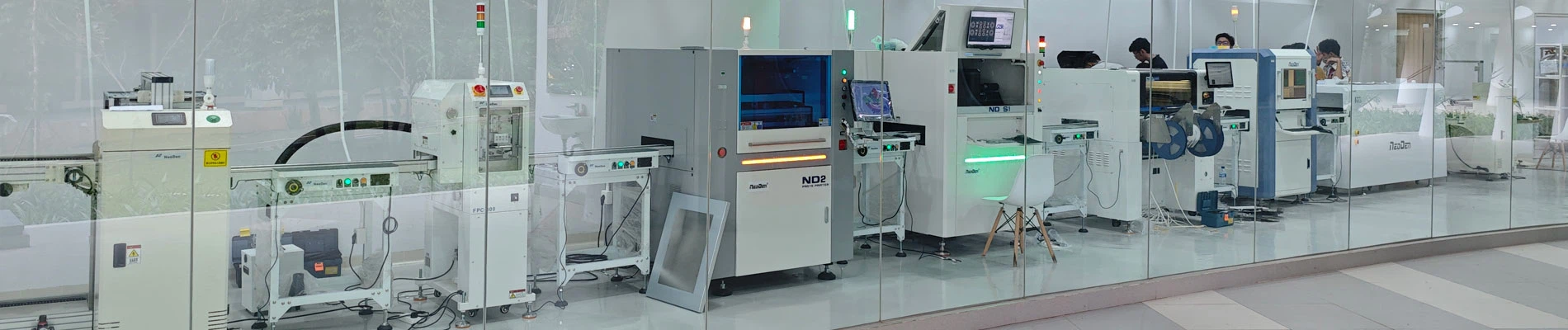
NeoDen provides a full SMT assembly line solutions, including SMT reflow oven, wave soldering machine, pick and place machine, solder paste printer, PCB loader, PCB unloader, chip mounter, SMT AOI machine, SMT SPI machine, SMT X-Ray machine, SMT assembly line equipment, PCB production Equipment SMT spare parts, etc any kind SMT machines you may need, please contact us for more information:
Zhejiang NeoDen Technology Co., Ltd
Web: www.neodensmt.com
Email: info@neodentech.com