
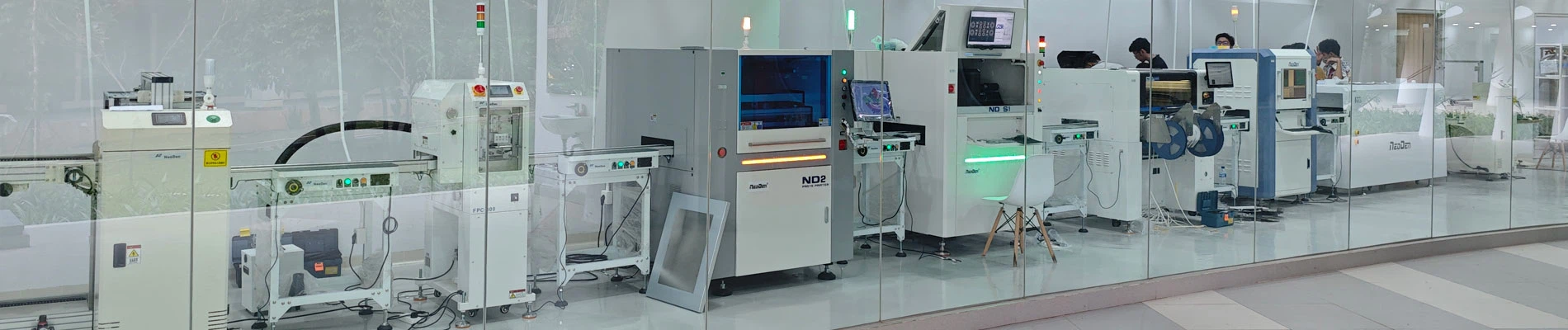
Choosing a good pick and place machine involves several considerations to ensure it meets your production needs, budget, and future scalability. Here are key factors to consider:
1. **Production Requirements**
**Speed and Throughput**: Determine the number of components you need to place per hour. Higher speed machines are essential for high-volume production.
**Accuracy and Precision**: Look for specifications like placement accuracy (in millimeters) to ensure the machine can handle the tolerances required for your components.
**Component Types**: Ensure the machine can handle the types of components you plan to use (e.g., SMD, through-hole, odd-shaped components).
2. **Machine Specifications**
**Number of Heads**: More heads can increase speed but may also increase complexity. Consider your production volume and flexibility needs.
**Nozzle Types and Sizes**: Check if the machine can accommodate a variety of nozzles for different component sizes.
**Feeder Options**: Look for machines that offer flexible feeding options (e.g., tape, tray, tube) to suit your components.
3. **Software and Programming**
**Ease of Use**: Evaluate the software interface for programming the machine. A user-friendly interface can reduce setup time and training costs.
**Programming Flexibility**: Ensure the software can handle complex assemblies and supports different file formats (e.g., Gerber, IPC-D-356).
4. **Scalability and Upgradability**
**Future Needs**: Consider whether the machine can be upgraded or expanded to meet future production demands.
**Modularity**: Look for machines that allow for the addition of more heads, feeders, or other components as your needs grow.
5. **Cost and Budget**
**Initial Investment**: Determine your budget for the machine, including any additional costs for software, feeders, and training.
**Operating Costs**: Consider maintenance, parts replacement, and energy costs over the machine's lifespan.
6. **Reliability and Support**
**Brand Reputation**: Research the manufacturer's reputation for quality and reliability.
**Customer Support**: Evaluate the availability of technical support, training resources, and warranty options.
7. **Reviews and Recommendations**
**User Feedback**: Seek reviews from other users in your industry to understand their experiences with specific machines.
**Industry Recommendations**: Consult with industry peers or trade shows for recommendations based on your specific application.
8. **Integration with Existing Systems**
**Compatibility**: Ensure the pick and place machine can integrate smoothly with your existing production line and equipment.
**Data Management**: Look for machines that offer data capture and reporting features for better process control.
9. **Space and Environment**
**Footprint**: Consider the physical space available in your facility and the machine's footprint.
**Environmental Conditions**: Ensure the machine can operate effectively in your production environment (e.g., temperature, humidity).
Conclusion
By carefully evaluating these factors, you can select a pick and place machine that aligns with your current needs and future growth plans.
NeoDen as a professional manufacturer for pick and place machine and SMT Line one-stop provider,you are welcome to discuss for the further details and solutions.