
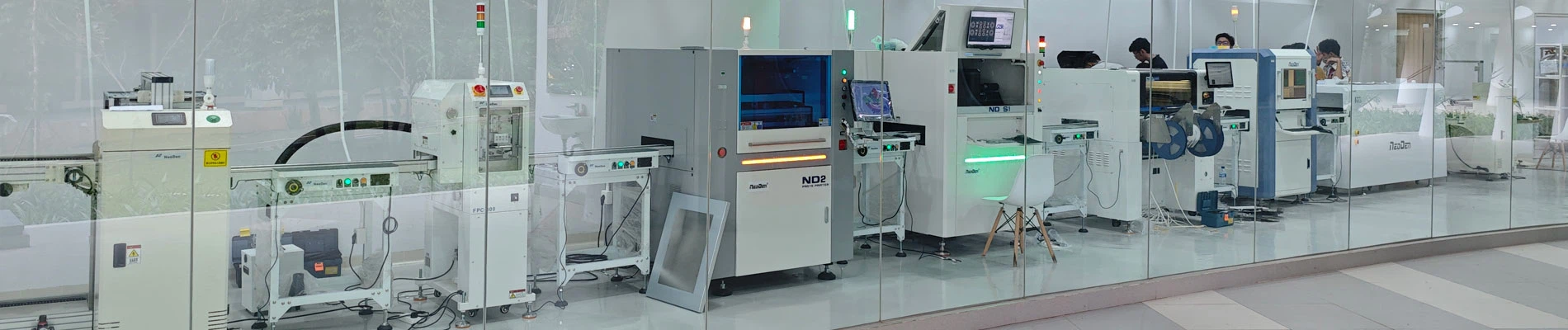
In the field of PCBA processing, the process of transforming prototyping into mass production not only involves technology and process changes, but also requires effective adjustments in production scale, cost control and quality management. In this paper, we will explore the prototype to mass production process from the main challenges faced by the transformation, and provide the corresponding solution strategy.
I. Design Verification and Optimization
1. Complexity of prototype design
The prototype stage is usually designed to validate the product concept and functionality, with a high degree of design flexibility, and may not take into account the actual needs of mass production. The board design at this stage may have some problems that are not suitable for mass production, such as overly complex layout, inefficient component arrangement, and so on. Therefore, the prototype design needs to be fully verified and optimized before being converted to mass production.
2. Design Optimization
To cope with the demands of mass production, prototype designs need to be optimized to ensure their manufacturability and reliability in mass production. This includes simplifying circuit layouts, optimizing component selection, and improving soldering feasibility. Design optimization can reduce problems in the production process, reduce production costs, and improve the quality and consistency of the final product.
II. Process transformation and scale production
1. Process Stability
Process stability is a key challenge in moving from prototype to mass SMT production. Manual soldering or low-precision placement machines that may be used in the prototype stage may not be able to meet the efficiency and consistency requirements in mass production. Therefore, high precision automated equipment and processes need to be introduced to ensure the stability and repeatability of the production process.
2. Production equipment and process adjustment
When converting to mass production, production equipment and processes need to be adjusted and upgraded. This includes the selection of suitable fully automated placement machines, soldering equipment and test equipment. In addition, the production process needs to be optimized, such as improving the soldering process and placement accuracy to meet the requirements of mass production.
III. Cost control and supply chain management
1. Cost estimation and control
Cost control is an important challenge during mass production. The production cost in the prototype stage is usually high, mainly due to small-lot production, test materials and equipment usage. In order to reduce the production cost, cost estimation and optimization are needed, such as reducing material cost through bulk purchasing and optimizing production process to improve production efficiency.
2. Supply chain management
Supply chain management is also crucial in the mass production process. A stable supply chain needs to be established to ensure timely supply of raw materials, components and equipment. At the same time, managing the quality and delivery time of suppliers to reduce the risk of supply chain disruption is also an important part of ensuring smooth mass production.
IV. Quality Control and Verification
1. Quality Inspection and Verification
The mass production process requires more quality control. While only limited testing may be performed during the prototype stage, comprehensive quality testing and validation is required during mass production. This includes testing each batch, checking for problems in the production process, and monitoring the consistency of the product. Ensuring the quality consistency of the product in mass production is the key to successful conversion.
2. Feedback mechanism
Establishing an effective feedback mechanism is crucial to solving problems during mass production. By collecting feedback information from the production line and adjusting and optimizing the production process, quality problems can be solved in time and production efficiency can be improved.

Zhejiang NeoDen Technology Co., LTD., established in 2010 with 100+ employees & 8000+ Sq.m. factory of independent property rights, to ensure the standard management and achieve the most economic effects as well as saving the cost.
Owned the own machining center, skilled assembler, tester and QC engineers, to ensure the strong abilities for NeoDen machines manufacturing,quality and delivery.
40+ global partners covered in Asia, Europe, America, Oceania and Africa, to successfully serve 10000+ users in all of the world, to ensure the better and faster local service and prompt response.
3 different R&D teams with total 25+ professional R&D engineers, to ensure the better and more advanced developments and new innovation.
Skilled and professional english support&service engineers, to ensure the prompt response within 8 hours, solution provides within 24 hours.