
Capacitors are one of the essential components in today's life, from a large circuit to a small electronic motherboard, especially for the start-up of single-phase motors, they are all needed. A capacitor is an electronic component that holds and releases an electrical charge.
How capacitors work
The working principle of capacitors is very simple. For example, in a water pipe at home, the water supply side has to travel a long distance and the amount of water will inevitably be large and small at times. If the water is supplied directly to the customer, the water will feel bigger and smaller at times. The water company usually builds a water tower at regular intervals. The purpose of this water tower is to store water, so that the unstable water can be delivered to each household in a stable manner.
This water tower corresponds to a capacitor in electronics, which stores energy, turning unstable electricity into stable electricity for transmission to the circuit. The ideal capacitor does not consume electrical energy itself, it discharges as much energy as it absorbs. When the input voltage fluctuates, the capacitor generates current, as it is charged or discharged, but when the voltage is stable, no current is generated, which is called "direct current flow".
Charging of a capacitor
When the two plates of a capacitor are connected to the positive and negative terminals of a battery, the two plates are charged with an equal amount of a different charge, a process called charging.
When the capacitor is charged, there is an electric field between the two plates and the potential difference is U. The electrical energy obtained from the power supply is stored in the electric field and this energy is called electric field energy. Capacitors have the ability to store charge and electric field energy.
Discharge of a capacitor
When the two plates of the capacitor are switched on after charging, the charges on the two plates are neutralised and the capacitor is no longer charged, this process is called discharge and there is a short discharge current.
Methods of labelling the main capacitor parameters
Direct marking method
Electrolytic capacitors or larger non-polar capacitors: nominal capacity, rated voltage and permissible deviation.
Smaller non-polar capacitors: nominal capacity, rated voltage and permissible deviation.
Capacity units: microfarads (μF), nanofarads (nF), picofarads (pF)
For example: 1p2 for 1.2 pF; 1n for 1 000 pF; 10n for 0.01 μF; 2μ2 for 2.2 μF.
Digit labelling method
The digital labelling method generally consists of three digits indicating the capacitance of the capacitor in pF. The first two digits are the effective digits of the capacitance, the third is the multiplier, but the third multiplier is 9 when it means ×10-1.
For example:
101 means: 10 × 101 = 100 pF
102 means: 10 × 102 = 1 000 pF
103 means: 10 × 103 = 0. 01 μF
104 means: 10 × 104 = 0.1 μF
223 denotes: 10 × 103 = 0. 022μF
474 denotes: 10 × 104 = 0. 47μF
159 denotes: 10 × 10-1 = 1. 5 pF
Colour coding method
Colour coding method: Colour rings or dots are marked on the capacitor to indicate the capacitance and the permissible deviation.
Four-ring colour coding method: the first and second rings indicate the effective value, the third ring indicates the multiplier and the fourth ring indicates the permissible deviation (for common capacitors).
Five-ring colour coding method: the first, second and third rings indicate the valid values, the fourth ring indicates the multiplier and the fifth ring indicates the permissible deviation (for precision capacitors).
For example:
Brown, black, orange and gold indicate a capacitance of 0.01 μF with a permissible deviation of ±5%
Brown, black, black, red, brown indicates a capacitance of 0.01 μF with a permissible deviation of ±1%.
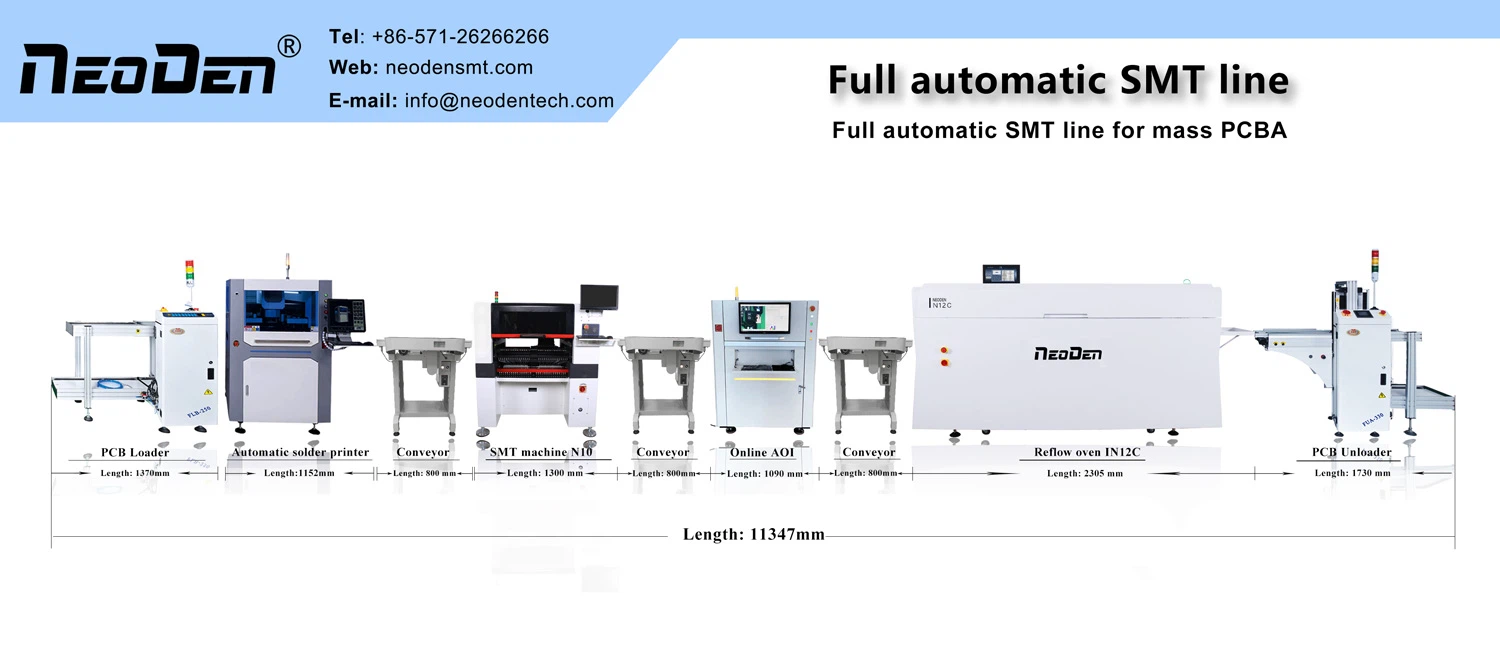
We are in a good position not only to supply you high quality pnp machine , but also the excellent after sales service.
Well-trained engineers will offer you any technical support.
10 engineers powerful after-sales service team can respond customers queries and enquiries within 8 hours.
Professional solutions can be offered within 24 hours both workday and holidays.
Add: No.18, Tianzihu Avenue, Tianzihu Town, Anji County, Huzhou City, Zhejiang Province, China
Phone: 86-571-26266266