
The avalanche photodiode was designed by Japanese engineer "Jun-ichi Nishizawa" in 1952. The avalanche photodiode is a very sensitive semiconductor detector that uses the photoelectric effect to convert light into electricity.
In fiber optic communication systems, a single component such as an avalanche photodiode is used to convert light into an electrical signal. During the avalanche process, charge carriers are generated by collisions. The light particle-like photons create many electrons, which in turn create an electric current.
What is an avalanche photodiode
A diode that uses the avalanche method to provide additional performance compared to other diodes is called an avalanche photodiode.
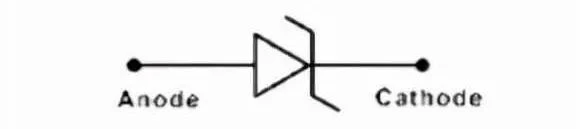
Avalanche photodiodes change an optical signal into an electrical signal and can operate at high reverse bias voltages. The symbol for an avalanche photodiode is similar to that of a Zener diode.
Avalanche Photodiode Structure
The structure of a PIN photodiode and an avalanche photodiode is similar and consists of two heavily doped regions and two lightly doped regions, the heavily doped regions are P+ and N+, while the lightly doped regions are I and P.

In the intrinsic region, the depletion layer width of the avalanche photodiode is rather thin compared to that of the PIN photodiode. Here, the p+ region acts like an anode, while the n+ region acts like a cathode.
Compared to other photodiodes, avalanche photodiodes operate under high reverse bias conditions. Therefore, the avalanche is multiplied by the charge carriers formed by light impingement or photons. The avalanche action increases the gain of the photodiode by a factor of several to provide a high sensitivity range.
Operating Criteria
Avalanche breakdown occurs primarily when the photodiode is subjected to a maximum reverse voltage that enhances the electric field beyond the depletion layer. As the incident light penetrates the p+ region, it is absorbed in the very resistive p region and then generates electron-hole pairs.
As long as a high electric field is present, the charge carriers including their saturation velocity drift to the pn+ region. When the velocity is highest, the carriers will collide through other atoms and generate new electron-hole pairs, and the huge charge carrier pairs will lead to high photocurrents.
Avalanche photodiode operation
Avalanche photodiode operation can be done entirely in depletion mode. However, in addition to the linear avalanche mode, they can also operate in the Geiger mode. In this mode of operation, the photodiode can operate at the aforementioned breakdown voltage. Another mode, the "sub-Geiger mode", is currently being introduced.
Avalanche photodiodes in fiber optic communication
In optical fiber communication (OFC) systems, avalanche photodiodes are often used for weak signal identification, but the circuit needs to be optimized enough to achieve a high signal-to-noise ratio (S/N). Here, the SNR is to obtain a perfect signal-to-noise ratio and the quantum efficiency should be high because this value is almost the maximum, so that most of the signal is noticed.
Avalanche photodiode characteristics
Avalanche photodiodes are highly sensitive, high-speed based diodes that work by applying a reverse voltage to the internal gain method. These diodes measure low range light compared to PIN type photodiodes and are therefore used in applications where high sensitivity varies, such as optical distance measurement and long range optical communication.
Disclaimer: This article is a network reproduction article, the purpose of reproducing this article is to disseminate relevant technical knowledge, the copyright belongs to the original author, if the infringement, please contact the editor to delete.