
Introduction
In the modernization of PCBA manufacturing, big data is emerging as an indispensable force for innovation. It is not merely about collecting vast amounts of information, but more importantly, about leveraging this data to optimize production, enhance quality, and predict future trends. From traditional passive production to today's data-driven smart manufacturing, big data is profoundly transforming every aspect of PCBA manufacturing.
I. Real-Time Monitoring and Production Optimization
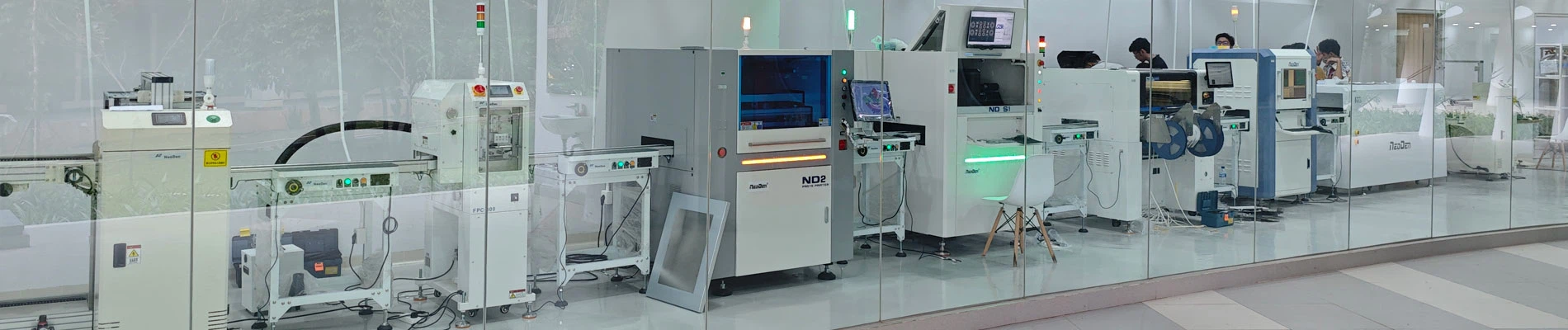
Historically, production line efficiency assessments relied heavily on post-event analysis. Issues on a production line were often only detected after defect rates exceeded acceptable thresholds. Big data technology has revolutionized this approach. By deploying sensors on equipment such as SMT placement machines, reflow ovens, AOI (Automated Optical Inspection), and ICT (In-Circuit Test) systems, operational data from each process step can be captured in real time.
Big Data Applications:
- Predictive Maintenance: By analyzing equipment parameters like temperature, vibration, and rotational speed, big data models can forecast potential failures, enabling proactive maintenance to prevent production interruptions caused by equipment downtime.
- Dynamic Process Parameter Adjustment: Minor changes in the production environment (e.g., workshop temperature and humidity) can impact soldering quality. Big data systems can analyze the relationship between environmental data and soldering yield in real time, automatically or semi-automatically adjusting the reflow soldering temperature profile to ensure optimal soldering results for every batch.
II. Quality Control and Defect Traceability
In traditional PCBA manufacturing, quality control primarily relies on sampling inspections and manual visual checks. This approach is inefficient and prone to overlooking hidden defects. Big data offers more comprehensive and precise quality assurance.
Big Data Applications:
- Comprehensive Quality Profiling: Big data systems establish a complete "quality profile" for each PCBA board. This integrates all data from component inventory, solder paste printing, placement, soldering, to final testing. If a board fails FCT functional testing, engineers can instantly retrieve its AOI and ICT data, even trace back to specific batches of components used, rapidly pinpointing the root cause.
- Defect Pattern Recognition: By analyzing vast historical defect data, big data models can identify complex defect patterns. For instance, it might reveal that a specific capacitor model is more prone to "tombstoning" after reflow soldering when paired with a particular chip model. Such insights far exceed human experience, providing precise direction for process improvements.
III. Supply Chain Management and Intelligent Production Scheduling
Big data applications extend beyond the production floor to the broader supply chain. By integrating supplier data, market demand, and production capacity, enterprises can achieve smarter production scheduling.
Big Data Applications:
- Demand Forecasting: By analyzing historical orders, seasonal variations, and market trends, big data models can more accurately predict future product demand. This enables enterprises to prepare materials in advance, avoiding production delays caused by component shortages.
- Collaborative Optimization: Robust big data systems break down data silos between production, inventory, and procurement departments. When a material faces inventory constraints, the system automatically adjusts production plans to prioritize manufacturing products that do not require that material. Simultaneously, it issues alerts to the procurement department, achieving coordinated optimization across the entire production chain.
Conclusion
The innovative application of big data in PCBA manufacturing is propelling this traditional industry into a new era of intelligence. It enhances production transparency and controllability, elevates quality management precision, and optimizes supply chain efficiency. For PCBA factories aiming to gain a competitive edge in the future, embracing big data technology is no longer optional-it is imperative.

Quick facts about NeoDen
1) Established in 2010, 200 + employees, 27000+ Sq.m. factory.
2) NeoDen Products:Different Series PnP machines, NeoDen YY1, NeoDen4, NeoDen5, NeoDen K1830, NeoDen9, NeoDen N10P. Reflow Oven IN Series, as well as complete SMT Line includes all necessary SMT equipment.
3) Successful 10000+ customers across the globe.
4) 40+ Global Agents covered in Asia, Europe, America, Oceania and Africa.
5) R&D Center: 3 R&D departments with 25+ professional R&D engineers.
6) Listed with CE and got 70+ patents.
7) 30+ quality control and technical support engineers, 15+ senior international sales, for timely customer responding within 8 hours, and professional solutions providing within 24 hours.