
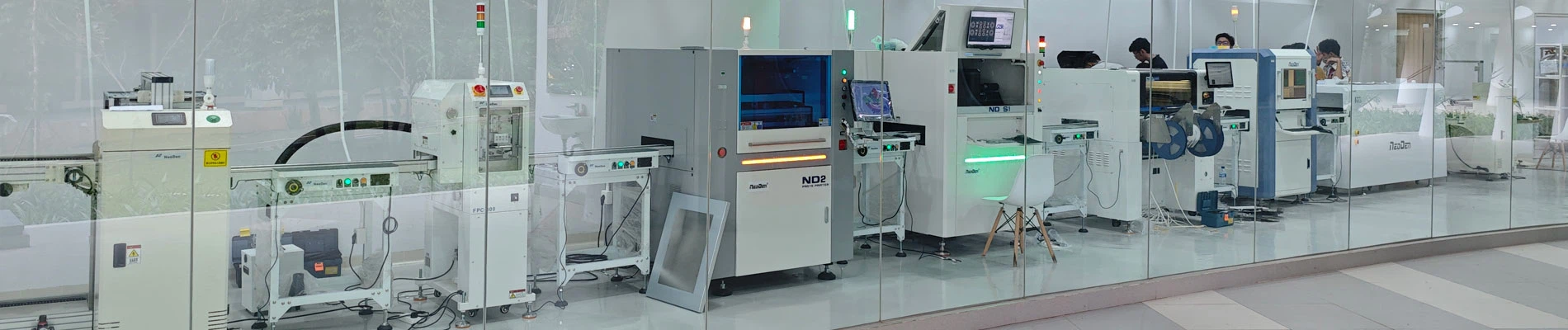

Introduction
In the Electronics Manufacturing Services (EMS) industry, quality control in PCBA manufacturing directly determines the market lifespan and brand reputation of end products. PCBA manufacturing involves high-precision surface-mount technology (SMT) and complex through-hole (DIP) processes, where even the slightest deviation can lead to batch-wide defects. The industry commonly employs the "Man, Machine, Material, Method, and Environment" (5M1E) analysis method to transform complex production variables into standardized, quantifiable control points. Drawing on practical manufacturing management experience from frontline factories, this article analyzes the practical application of these five elements in quality management at PCBA manufacturing facilities.
Man: Closed-Loop Management from Job Qualifications to Error-Proofing Awareness
The operational proficiency and quality awareness of frontline manufacturing staff are the first line of defense in determining PCBA delivery times and yield rates. The core of a manufacturing facility's control over "people" lies in establishing strict job entry mechanisms and regular skill assessments. Key positions-such as SMT operators, AOI inspectors, and X-ray inspection technicians-must be 100% certified before being allowed to work. Factories must establish an employee skills matrix and conduct quarterly spot checks of practical operations to ensure technical capabilities meet the processing requirements for multilayer boards and fine-pitch components (such as 01005 components and 0.4mm-pitch BGAs). For manual soldering and repair positions, soldering iron temperature and contact time must be strictly controlled to prevent pad delamination or substrate blistering caused by improper operator handling. Additionally, by reporting the previous day's defect codes (e.g., insufficient solder, tombstoning, solder bridging) during daily pre-shift meetings, quality targets are broken down to specific workstations, thereby enhancing frontline employees' quality awareness.
Machine: Precise Maintenance and Dynamic Monitoring of Equipment Parameters
PCBA manufacturing relies heavily on automated equipment, the precision and stability of the machines directly determine the Process Capability Index (Cpk). The focus of equipment management lies in preventive maintenance and real-time monitoring of key parameters. Daily, weekly, and monthly maintenance checklists must be established for critical equipment such as solder paste printers, pick and place machines, and reflow ovens. Taking the pick and place machine as an example, the wear level of the nozzles and vacuum pressure must be checked daily to prevent an increase in scrap rates due to insufficient suction; the positioning accuracy of the pick-and-place head's X/Y axes must be periodically compensated using calibration plates to ensure that placement deviations for micro-components such as 0201 parts are controlled within ±0.03 mm. For reflow soldering, a temperature profile tester (such as KIC) must be used to measure the actual temperature profile at least once daily for PCBs of varying thicknesses and layer counts, ensuring that parameters such as peak temperature, heating rate, and time-at-liquid (TAL) fully comply with lead-free soldering process specifications.
Material: Incoming Inspection and End-to-End Traceability System
Material quality is the cornerstone of PCBA manufacturing. Defects in components and PCBs cannot be remedied through subsequent process adjustments. Therefore, 100% compliance checks must be completed before materials are stored in the warehouse or used on the production line. The Quality Department must strictly enforce IQA (Incoming Quality Assurance) specifications. For PCBs, the focus is on inspecting board thickness, copper thickness, pad solderability, and gold finger plating thickness. For components such as ICs, resistors, and capacitors, labels, lot numbers, and specifications must be verified, and random solderability tests must be conducted. For moisture-sensitive devices (MSDs), vacuum packaging must be inspected in strict accordance with standards, exposure time must be recorded, and materials exceeding the exposure limit must undergo low-humidity baking. In material management, a barcode (or QR code) management system is fully implemented to enable end-to-end, bidirectional traceability throughout the entire process-from coil material warehousing, error-proofing during feeding, and surface-mount assembly to finished product shipment-ensuring that defective materials from the same batch can be identified within 3 minutes in the event of an anomaly.
Method: Standardized Execution of Process Documentation and Engineering Change Control
"Method" refers to the process specifications, Standard Operating Procedures (SOPs), and technical parameters that guide production. Standardization and process consolidation are the core measures for preventing batch-level quality incidents. Before mass production begins for each PCBA product, the engineering department must prepare comprehensive SMT process documentation, clearly defining solder paste printing pressure, speed, and release distance, as well as the setpoints for each temperature zone in the reflow oven. For new product introductions (NPI), a small-batch trial production phase must be completed, including a design for manufacturability (DFM) review. Only after a trial production report is finalized and process defects are corrected can the product proceed to mass production. When a customer changes the design or the factory optimizes the process, the engineering change notice (ECN) process must be strictly followed. Outdated process documents and materials must be phased out, and on-site tooling and fixtures must be updated simultaneously to prevent production line disruptions caused by the mixed use of old and new processes.
Environment: Strict control of electrostatic protection and workshop temperature and humidity
PCBA manufacturing is extremely sensitive to the production environment. Failure to maintain proper environmental control can directly result in damage to the electrical performance of components or a sharp increase in soldering defects. The workshop environment must be maintained at a constant temperature and humidity, with the temperature generally controlled at 22°C ± 3°C and relative humidity kept between 40% and 60%. Excessively low humidity can easily generate static electricity, while excessively high humidity causes solder paste to absorb moisture, leading to boiling during reflow soldering and resulting in defects such as solder balls and porosity. Electrostatic discharge (ESD) protection is of the utmost importance in the workshop, a complete grounding loop must be established, encompassing the floor, workbenches, storage bins, and anti-static clothing, footwear, and wrist straps. Personnel entering the workshop must undergo daily testing using a comprehensive electrostatic tester. Within the workshop, an electrostatic tester is used regularly to check the resistance to ground at each workstation, ensuring that electrostatic voltage remains within safe thresholds (typically less than 100 V) to protect sensitive chips from latent damage at the source.
To continuously optimize the overall quality of PCBA manufacturing, these five key elements must be deeply integrated into every detail of daily production.

Quick facts about NeoDen
- Established in 2010, 200 + employees, 27000+ Sq.m. factory.
- NeoDen Products:Different Series PnP machines, NeoDen YY1, NeoDen4 ,NeoDen5, NeoDen K1830, NeoDen9, NeoDen N10P. Reflow Oven IN Series, as well as complete SMT Line includes all necessary SMT equipment.
- Successful 10000+ customers across the globe.
- 40+ Global Agents covered in Asia, Europe, America, Oceania and Africa.
- R&D Center: 3 R&D departments with 25+ professional R&D engineers.
- Listed with CE and got 70+ patents.
- 30+ quality control and technical support engineers, 15+ senior international sales, for timely customer responding within 8 hours, and professional solutions providing within 24 hours.