

Introduction
In the modern electronics manufacturing industry, PCBA manufacturing is a critical process. Improving production efficiency in PCBA manufacturing not only reduces production costs but also shortens lead times and enhances a company's market competitiveness. This article will explore several methods and strategies for improving production efficiency in PCBA manufacturing.
Design and Engineering Optimization
1. Design Optimization
In the early stages of PCBA manufacturing, optimizing the circuit board design is the foundation for improving production efficiency.
- Design for Manufacturability (DFM): Consider manufacturing processes during the design phase to simplify production workflows and reduce complexity.
- Standardized Design: Use standardized components and designs to minimize customization requirements and increase production speed.
- Design for Testability (DFT): Incorporate test points and testing methods into the design to facilitate later quality inspections and improve testing efficiency.
2. Engineering Optimization
Optimizing engineering processes ensures rapid design implementation and efficient production.
- Rapid Prototyping: Utilizing rapid prototyping technology shortens the development cycle for new products and quickly validates design feasibility.
- Simulation and Modeling: Conducting simulations and modeling during the design phase helps identify and resolve potential issues in advance, reducing rework and revisions.
Introduction of Automated Equipment
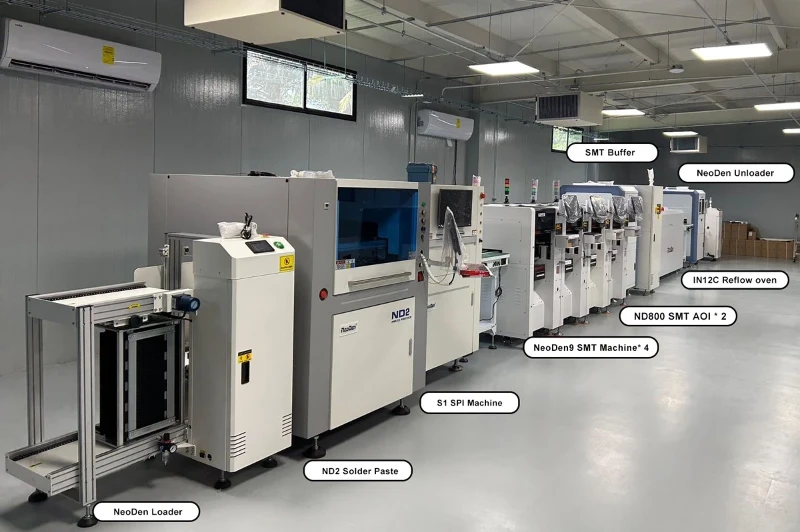
1. Automated Surface Mount Machines
Automated SMT placement machines can quickly and accurately mount electronic components onto circuit boards, making them essential equipment for improving production efficiency.
- High-Speed Placement: High-speed pick and place machines increase component placement speed and reduce production cycles.
- High-Precision Placement: High-precision SMT machines ensure accurate component placement, minimizing placement errors and subsequent rework.
2. Automated Soldering Equipment
The introduction of automated soldering equipment improves soldering speed and quality.
- Reflow Oven: Automated reflow soldering equipment completes the soldering process quickly and efficiently, ensuring soldering quality.
- Wave Soldering Machine: Wave soldering is suitable for high-volume production, capable of soldering multiple joints simultaneously to improve production efficiency.
Implementing Information-Based Management
1. Manufacturing Execution System (MES)
The MES system plays a crucial role in PCBA manufacturing, enabling real-time monitoring and management of the production process.
- Production Planning Management: The MES system optimizes production schedules, allocates production resources efficiently, and improves production efficiency.
- Process Monitoring: It monitors various parameters in real time during the production process, enabling timely identification and resolution of issues to ensure a smooth production flow.
- Data Collection and Analysis: Through data collection and analysis, it optimizes production processes and continuously improves production efficiency.
2. Enterprise Resource Planning (ERP) System
The ERP system integrates the company's various resources to enable information sharing and collaborative management.
- Procurement Management: Optimizes procurement processes through the ERP system to ensure timely supply of raw materials and prevent production delays.
- Inventory Management: Manages inventory effectively to reduce inventory costs and ensure timely supply of materials required for production.
- Financial Management: Enables real-time updates and analysis of financial data, improving the accuracy and efficiency of financial management.
Strengthening Staff Training and Management
1. Skills Training
Improving the skill levels of operators is a key factor in enhancing production efficiency.
- Regular Training: Conduct regular skills training for operators to improve their operational proficiency and problem-solving abilities.
- Professional Certification: Encourage operators to pursue professional certifications to enhance their professional competence and technical skills.
2. Lean Management
Optimize production processes, reduce waste, and improve production efficiency through lean management.
- 5S Management: Implement 5S management to maintain a clean and orderly production environment and improve work efficiency.
- Continuous Improvement: Utilize the PDCA cycle (Plan-Do-Check-Act) to continuously improve production processes and boost production efficiency.
Optimizing Supply Chain Management
1. Supplier Management
Optimize supplier management to ensure the quality and stable supply of raw materials.
- Supplier Evaluation and Selection: Conduct rigorous evaluations and selections of suppliers to ensure they possess stable supply capabilities and quality control capabilities.
- Supplier Performance Management: Regularly evaluate supplier performance, communicate promptly to resolve issues, and establish long-term cooperative relationships.
2. Logistics Management
Optimize logistics management to ensure timely supply of materials and rapid delivery of finished products.
- Logistics Planning: Develop detailed logistics plans, rationally schedule the transportation of materials and finished products, and reduce logistics costs.
- Warehouse Management: Optimize warehouse management to ensure the safe storage of materials and finished products, as well as rapid entry and exit from the warehouse.
Conclusion
In PCBA manufacturing, companies can significantly improve production efficiency by optimizing design and engineering, introducing automated equipment, implementing information-based management, strengthening staff training and management, and optimizing supply chain management. Efficient PCBA manufacturing not only reduces production costs and improves product quality but also enhances a company's market competitiveness. Moving forward, companies should continue to focus on and adopt new technologies and methods, constantly optimizing production processes to achieve higher production efficiency and superior product quality.

Quick facts about NeoDen
- Established in 2010 with 200+ employees & 27,000+ Sq.m. factory of independent property rights, to ensure the standard management and achieve the most economic effects as well as saving the cost.
- Owned the own machining center, skilled assembler, tester and QC engineers, to ensure the strong abilities for NeoDen machines manufacturing, quality and delivery.
- 40+ global partners covered in Asia, Europe, America, Oceania and Africa, to successfully serve 10000+ users in all of the world, to ensure the better and faster local service and prompt response.
- 3 different R&D teams with total 25+ professional R&D engineers, to ensure the better and more advanced developments and new innovation.
- Skilled and professional english support&service engineers, to ensure the prompt response within 8 hours, solution provides within 24 hours.
- The unique one among all of the Chinese manufacturers who registered and approved CE by TUV NORD.
- NeoDen supplies life-long technical support and service for all of the NeoDen machines, moreover, regular software updates based on the using experiences and actual daily request from the endusers.