
In this tutorial, I’ll walk you through the process of designing a PCB layout and getting it printed by a custom PCB manufacturer. The performance of your circuit will depend greatly on how it’s laid out on the PCB, so I’ll give you lots of tips on how to optimize your design.
You can always etch PCBs at home with a process that’s similar to developing prints from photographic film. But that method is messy and it uses a lot of chemicals. It’s much easier (and cheaper) to get your PCB made by a professional manufacturer. To demonstrate the process, I’ll use an online service called EasyEDA to design a PCB layout for an LM386 audio amplifier, then I’ll have it manufactured and show you the results. Their free online design software is easy to use and the rates are very affordable.
IT ALL STARTS WITH A SCHEMATIC
Before you start designing your PCB, it’s a good idea to make a schematic of your circuit. The schematic will serve as a blueprint for laying out the traces and placing the components on the PCB. Plus, the PCB editing software can import all of the components, footprints, and wires into the PCB file, which will make the design process easier (more on this later).
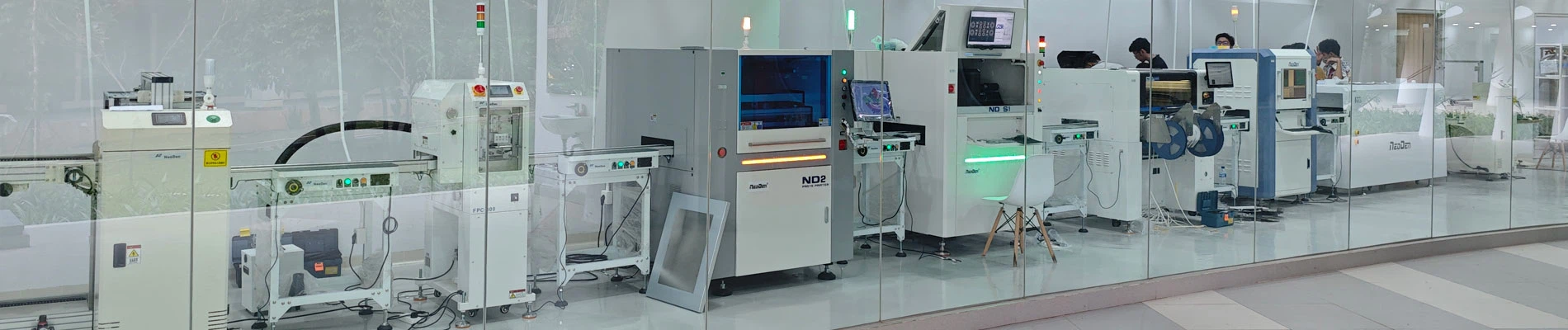
NeoDen provide a full smt assembly line solutions, including SMT reflow oven, wave soldering machine, pick and place machine, solder paste printer, PCB loader, PCB unloader, chip mounter, SMT AOI machine, SMT SPI machine, SMT X-Ray machine, SMT assembly line equipment, PCB production Equipment smt spare parts etc any kind SMT machines you may need, please contact us for more information:
WHAT TO KNOW BEFORE STARTING
Before you begin, you’ll want to get an idea of how much output power you want from the amplifier. You’ll also need to know the impedance of your speakers and the input voltage of your audio source. Be sure to check the TDA2050’s datasheet to find the absolute maximum ratings for these parameters, and design your amp to stay within the safe operating limits.
According to the datasheet, the TDA2050 can output 28 Watts into 4 Ω speakers with 0.5% distortion on a 22 V power supply. I’ll be powering 6 Ω speakers with my amplifier, so I’m going to aim for about 25 Watts output power. I’ll be using an iPhone as the audio source, which has a 1 V output voltage.
Hangzhou NeoDen Technology Co.,Ltd
Add: Building 3,Diaoyu Industrial and Technology Park,No.8-2,Keji Avenue, Yuhang District, Hangzhou,China
Contact us: Steven Xiao
E-mail:steven@neodentech.com
Phone:86-18167133317
Skpe:toner_cartridge