
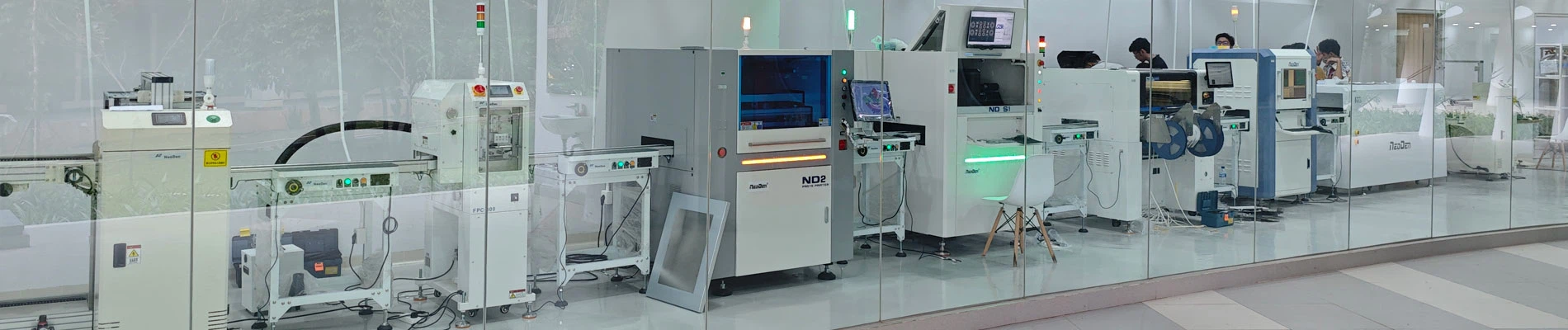
The best way to learn about actual testing is to visit the PCBA manufacturing facility that makes products similar to yours and see the entire production line, from the boards into the shop until the products are packed and shipped. Being able to experience the various processes in the production process is very helpful for us to understand how the circuit board is produced. So today we will focus on the analysis of functional testing related issues:
Before the SMT process of a circuit board, there is usually a DFM instruction in the design process. This will keep you on a testability design schedule throughout the design process. It makes it clear what aspects of testing are included in the schematic, PCB layout, and even microcontroller code.
For example, if the user touches capacitive touches, what do you expect that action to do? Maybe it wakes up the screen or turns on the LED and tells the microcontroller to do something. This requires that all of your components have the correct voltage, capacitive touch sensors and leds installed correctly, and that the microcontroller is programmed and functioning as expected. This program of functional testing will guide the quality of the entire PCBA board fabrication process.
The test points are just PCB pads on the board, designed for easy detection. For a variety of reasons, you don't want to rely on the pins or pads of the probe component. The dimensions of these pads are not specified, but they should be large enough to allow easy contact with the test probe.
If you look at the internal structure of any sufficiently complex product, you may find a programming connector or a slot on a PCB where a programming connector might be placed. This connector is typically used to program microcontrollers already installed on the PCB and is therefore referred to as "in system". In a production scenario, it would not make sense to install this header. It is used by designers for debugging purposes and is not installed during production to eliminate costs.
For early prototypes or small designs, you can manually test each board yourself. You'll thank your future self for completing this exercise because it gives you an appreciation and understanding of what it takes to make sure your product works. Humans aren't usually good at repeatability, so having a test plan, even with checkboxes, can help you avoid skipping any steps.

Zhejiang NeoDen Technology Co., LTD., founded in 2010, is a professional manufacturer specialized in SMT pick and place machine, reflow oven, stencil printing machine, SMT production line and other SMT Products. We have our own R & D team and own factory, taking advantage of our own rich experienced R&D, well trained production, won great reputation from the world wide customers.
We believe that great people and partners make NeoDen a great company and that our commitment to Innovation, Diversity and Sustainability ensures that SMT automation is accessible to every hobbyist on everywhere.